
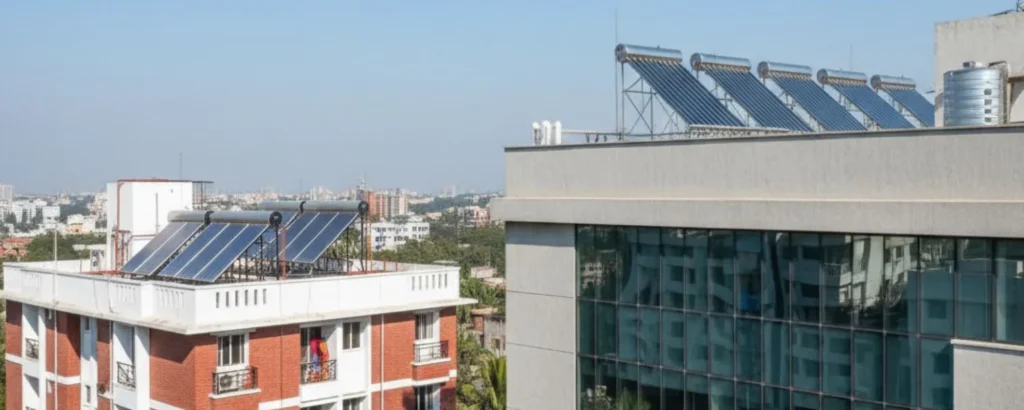
Solar energy can be used to heat water, which is an efficient way to provide water for homes and businesses. A reliable method to meet hot water requirements without relying on electricity is using a solar water heating system.
To make the best choice, you need to be knowledgeable about current technologies if you are thinking about investing in a water heating system for your house or business place.
The evacuated tube collector and the flat plate collector are the two primary technologies. To help you make wise choices, let’s examine the advantages, downsides, and operations.
How Solar Water Heating Systems Work
Sunlight is captured by a solar water heating system and transformed into thermal energy. Heat is absorbed by collectors mounted on rooftops and transmitted to water stored in an insulated tank. Depending on the design and requirements, the system can run passively or with a pump.
Efficiency and dependability are important. With a small amount of energy, an efficient system can provide you with hot water whenever you need it. Applications for modern systems range from big commercial or industrial to single-family homes.
Solar Water Heaters with Flat Plates
The most common and widely utilised household solar water heaters are flat-plate collectors. In short, they are made up of a glass layer covering a flat absorber surface that is sealed in a watertight shell.
Heat from the sun is collected via pipes attached to the absorber by water or a heat-transfer fluid.
Benefits of Flat Plate Solar Systems:
- Strong and durable with a lasting operating life
- Simple design, which is easy to install and maintain
- Best for areas with ample sunlight
- Cost-effective for residential use
In both sunny and moderate temperatures, flat panel solar water heaters work effectively. Both homes and small businesses with a steady need for hot water can use them. Additionally, because they have greater surfaces, they are effective at collecting sunlight.
Flat Plate Water Heating System Downside
Flat plate collectors are less effective in regions with colder temperatures and during long stretches of cloudy weather. Also, it has less capacity of holding heat than the evacuated tube collector. A flat plate collector, on the other hand, may be a simple and cost-effective solutions for hot water needs during times of direct sunlight.
Evacuated Tube Solar Water Heaters
To reduce heat loss, evacuated tube system water heaters use several kinds of cylindrical glass tubes with a partial or evacuated vacuum within. A heat pipe in each tube transfers solar energy to a tank of water. Due to this, the system can retain heat even under low solar conditions.
Benefits Of Evacuated Tube Systems
- Works efficiently during cloudy weather
- Retains water temperature for longer durations
- Works best for commercial and industrial use
Such water systems are ideal for installation in businesses, hotel resorts, and any other business that requires a lot of water. They are a suitable option for a continuous hot water supply because of their ability to maintain temperature in any situation.
The Evacuated Tube System Water Heater’s Downside
Typically, evacuated tube systems require more careful installation and a larger initial investment. The vacuum tubes are readily maintained, although periodic inspections are necessary to avoid breakage and reduced effectiveness. Despite these factors, the cost-saving advantages of energy conservation frequently outweigh the expense.
Compare Evacuated Tube and Flat-Plate Systems
Budget, water demand, and climate must all be considered when deciding between evacuated tube and flat-plate systems. A simple comparison reveals their main differences:
Flat Plate Collectors
- Works best in sunny regions
- Less capital is needed upfront
- Suitable for residential and small business applications
- Easy maintenance
Evacuated Tube Collectors
- Suitable for cloudy and cold environments
- High initial cost but enhanced heat retention capacity
- Works best as a commercial solar water heater
- Slightly higher maintenance due to tube inspection requirements
Such a contrast makes it clear that there is no ‘one-size-fits-all’ system. The area, consumption, and cost variables play a major role.
Things to Consider Before Choosing Solar Water Heaters System
The choice of a solar water heating system is affected by several useful factors:
Climate Conditions
In regions that are abundant enough in sunlight throughout the year, the flat plate systems work well. Evacuated tube collectors, on the other hand, work well in areas with less direct sunlight.
Water Usage
A small water tank can be used for home usage systems, while bigger ones may be needed for commercial locations like hotels, institutions, or factories, depending on demand.
Space of Installation
While evacuated tube solar systems can be installed in smaller locations, flat plate systems need bigger roof areas for maximum efficiency.
Budget and Future Savings
Both systems have different initial and ongoing costs. While evacuated tube systems offer better performance and efficiency over the years, flat plate systems are more costly.
Maintenance Requirements
Regular testing is required for all types, but evacuated tubes may need more attention to ensure that each tube works at its optimal level.
Why Businesses and Homeowners Choose Solar Water Heating
There are many advantages to implementing solar water heating systems.
- Decreases dependence on gas or electricity
- Reduces monthly energy costs
- Provides hot water when required.
- Reduces the Carbon Footprint
- It raises the value of property.
A high-performance system can help commercial operators show their dedication to sustainability and improve productivity, both of which are important in today’s marketplace.
Considerations for Installation and Support
Proper system sizing, installation, and maintenance is ensured when working with a professional solar system manufacturer. To suggest the most suitable technology, experts can assess factors like water usage, solar exposure, and roof structure. In addition to the system, a reliable manufacturer gives advice and continuing support, guaranteeing peak performance over many years of use.
Making the Right Decision
Climate, capacity, budget, and long-term goals all have to be addressed when selecting a solar water heating system. The best places for flat plate collectors are those with year-round sunshine or those that have low water heating needs. Evacuated tube collectors work well in a variety of climates and have a larger storage capacity. In the end, buying a solar hot water heating system may offer convenient hot water, energy reductions, and environmental advantages. Customized solutions made to fit their specific needs might be beneficial to both residential and business users.
Find a Solar Water Heating Expert Near You
Locate our authorized solar specialists and get expert guidance for choosing the right solar water heating system for your needs.
Frequently Asked Questions
In reality, solar water heating systems can coexist with gas or electric geysers. In order to lower total energy usage and maximize convenience, the solar system preheats the water while the backup heater only runs when needed.
The majority of solar water heating systems may operate effectively for 15 to 20 years with appropriate installation and routine maintenance. Tanks and collectors, for example, are made to be used outside for a long amount of time in an array of Indian weather conditions.
Before installation, a rooftop load assessment is important. Standard systems can be backed by most residential and commercial buildings, but older structures could need a simple structural inspection to ensure long-term stability and safety.
Indeed, the majority of solar water heating systems run with a demand for electricity. They are especially helpful in places where power outages occur frequently because hot water supply depends on sunshine rather than grid power.
No specific permissions are needed in the majority of home settings. Local building codes or society approvals may be required for commercial or large-scale installations, especially if the systems are placed on shared rooftops.