
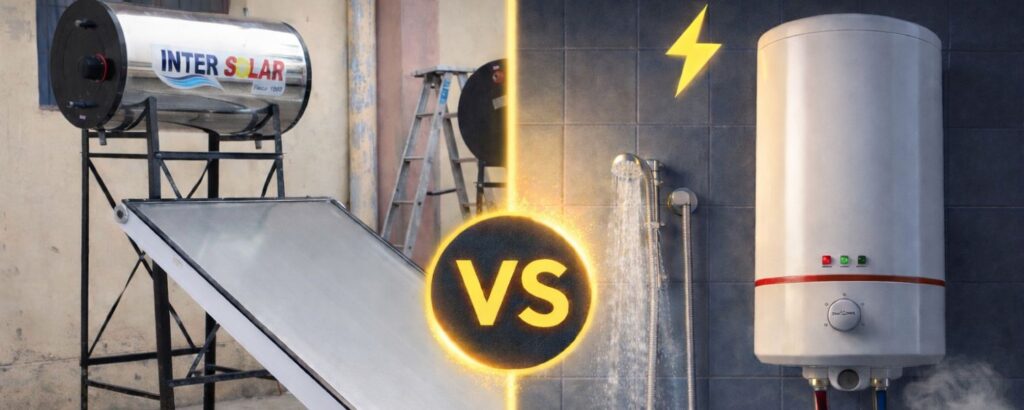
Hot water is a daily essential, but few of us think about how much energy it actually takes to heat it. The choice between a solar water heater and an electric geyser can quietly affect not just your bills but also your home’s energy footprint. So, which one really comes out on top?
The choice between the two may seem pretty simple, but it comes with a big difference in perspective as far as your energy bill and the environment are concerned. So, when it comes down to solar water heater vs electric geyser, which one really saves more energy? Let’s explore this in simple terms.
Understanding How Each System Works
Before choosing the best water heating system in India, it helps to understand how both systems function.
Solar water heater
The water heaters use sunlight through solar collectors technology. Mainly solar water heaters are of two types: flat plate solar water heaters and evacuated tube systems water heaters. The heated water is stored in an insulated tank, ready for use throughout the day. Many models also come with an electric backup to make sure hot water is available during overcast days.
Electric geyser
An electric geyser runs completely on electricity. It contains a heating element that heats up the water whenever you turn it on. As much as it is fast and easy to use, it will also consume a lot of energy, especially during the winter season when demand is higher.
In short, solar systems work with nature, while electric geysers depend on the grid.
Energy Efficiency: Who Wins the Battle?
When comparing solar water heater vs electric geyser, energy efficiency becomes the biggest deciding factor.
Solar heaters convert free solar energy into heat, reducing dependency on electricity.
They have the capacity to reduce energy usage for water heating up to 70 to 80 percent on average over a year.
Electric geysers consume about 2 to 3 units of power per day. Multiply that by a year, and it’s almost 1,000 units or more, translating into higher bills and energy waste.
Because sunlight is free and abundant in most parts of India, a solar water heater easily comes out ahead in energy efficiency.
Cost Comparison: Investment versus Long-Term Savings
The most common question asked is, “Which one is cheaper to run?”
Here’s the comparison:
Solar Water Heater
Higher upfront cost: anywhere from ₹20,000 to ₹80,000 depending on capacity and type.
Minimum running cost as it uses solar energy.
Duration: Lasts up to 20 years or more with regular maintenance.
It pays in the long run by saving on electricity bills.
Electric Geyser
Lower purchase cost: usually ₹5,000 to ₹15,000.
Continuous using leads to high expenditure per month.
Short life span of about 7 to 10 years.
Replacements add up along with running costs.
If you think long-term, solar water heaters prove to be the more affordable and best water heating system in India for households and businesses alike.
India’s Climate: Perfect for Solar Energy
One of the biggest advantages of installing a solar water heating system in India is our weather.
Most regions enjoy over 250 to 300 sunny days in a year, and so solar heating is practical for homes, hostels, and even hospitals. On the other hand, electric geysers depend on a stable power supply.
In a climate like India, it is a smart choice to save energy; a solar water heater is cost-effective, sustainable, and environmentally friendly.
Maintenance and Lifespan: What to Expect
Both of these systems require basic upkeep, but the effort and results vary.
Solar Water Heater
Needs occasional cleaning of solar panels or tubes to remove dust and ensure efficient heating.
Made with corrosion-resistant tanks and strong insulation for durability.
Can last up to two decades or more with simple care.
Electric Geyser
Requires regular checks for heating element wear and tank corrosion.
Generally lasts less than 10 years, especially in areas with hard water.
So, although they are systems that require initial maintenance, their durability makes them a more value-for-money investment.
Environmental Impact: Clean vs Conventional Energy
Energy savings aside, there’s another major reason people are switching to solar: sustainability.
Each installed solar water heater reduces the burden on coal- or gas-fed power plants. This will help reduce carbon emissions and lessen your household’s general ecological footprint.
On the other hand, an electric geyser draws on electricity from the grid, which indirectly creates pollution. In times when sustainability is more crucial than ever, solar energy has emerged as a responsible and future-ready solution.
Convenience and Daily Use
Both systems were created to make life easier, but they serve different needs.
Solar Water Heater Advantages:
Ideal for large families or continuous use throughout the day.
Stores hot water for long periods.
Works quietly and efficiently.
Offers backup options during cloudy days.
Advantages of Electric Geysers:
Best for smaller households or for quick heating.
Compact, easy to install and relocate. Heats water instantly with a switch.
If your goal is quick convenience, electric geysers win. But for everyday reliability and lower bills, solar water heaters take the lead.
Takeaway: Selecting the Best Water Heating System in India
So, when it comes to solar water heater vs electric geyser, which one should you choose?
If your goal is energy efficiency, cost-effectiveness, and sustainability, then the solar water heater is among the best water heating system in India. It’s a long-term investment that pays off through lower energy bills and minimal maintenance.
While electric geysers work fine on a small scale or for temporary needs, they decidedly lack the long-term savings and environmental benefits brought in by these solar systems.
Are you ready to harness the power of solar for your home? Let Inter Solar Systems design the perfect energy solution for you.
Frequently Asked Questions
A solar system can reduce electricity consumption by up to 70 to 80 per cent, depending on usage and sunlight availability.
Yes. Most systems include an electric backup heater that maintains hot water even in low sunlight conditions.
For a family of four, a 200-litre solar system is usually sufficient. Larger households or businesses may need bigger capacity systems.
Solar water heaters last 15 to 20 years on average, whereas electric geysers typically last 7 to 10 years.
The solar water heater is far more eco-friendly as it uses renewable energy and reduces carbon emissions.