
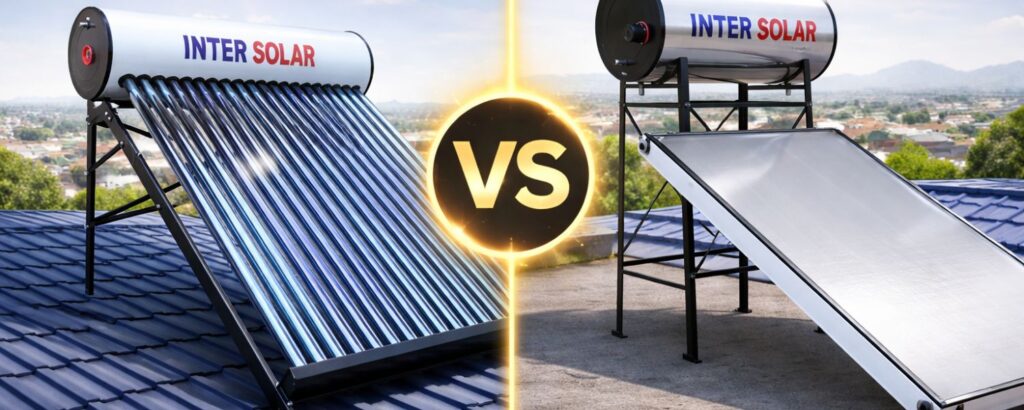
For most Indian homes, especially during winters or in hilly states, hot water is a daily necessity, whether for bathing, cooking, or cleaning purposes. With the increasing cost of electricity and LPG, many households have started shifting towards solar water heaters for reliable and economic heating. With two famous options in the market, namely ETC vs FPC solar water heater systems, people often struggle with finding which system is right for them. This guide goes through the major solar heater types in India, compares their performance, and helps you decide on the system that would suit your home the best.
Why the Right Solar Heating System Matters
A solar water heater is a long-term investment. The right selection of the system will impact how efficiently your water is heated and the frequency of maintenance required to save you money in the long run. These, in turn, have their effects on performance due to extreme climatic variations, types of roofs, and variations in the quality of water. In addition to better efficiency, choosing the right system means more economical running, consistent water temperature, and a longer-lasting installation. This is why it is very important to understand the difference between ETC and FPC solar water heaters before buying one.
Understanding the Two Main Solar Heater Types in India
In India, there are mainly two types of Solar Water Heaters. Evacuated tube collectors and flat plate tube collectors. Let’s understand each type to help you make a better choice.
What is an ETC Solar Water Heater?
Evacuated tube collectors, or ETCs, comprise a set of long glass tubes that absorb sunlight and consequently heat up. Because the vacuum inside the tubes is so great, they retain heat very well. In this respect, these kinds of heaters will warm water up fast, either in early mornings or cooler regions. They have a very simple design, are easy to install, and are generally inexpensive. Most homeowners prefer ETC solar water heaters when they need fast heating at an affordable price.
What is an FPC Solar Water Heater?
Flat Plate Collectors, or FPCs, utilize copper or aluminum plates coated with a special sunlight-absorbing layer. There is a network of pipes through which water passes through the heated plate. FPC systems are rugged, very efficient, and designed to last in hot climates. These are often used in homes that want a premium system that can last many years with stable output.
ETC vs FPC Solar Water Heater: Key Differences
Understanding the difference in ETC vs FPC solar water heater systems helps you match the right technology to your home.
1. Heat efficiency
ETC heaters heat water fast since glass tubes trap heat well. They work exceptionally well in colder or moderate climates. FPC heaters perform great in high sunlight conditions and handle high temperatures easily. They tend to always provide more uniform heat in areas where the summers are extremely hot.
2. Water quality tolerance
Water quality plays an important role in the choice between these types of solar heaters in India. ETC tubes barely react to minerals and salts, hence ideal for areas with hard water. For hard water, unless you are using a water softener, FPC systems work out less well since, over time, minerals can settle inside the copper pipes.
3. Durability and lifespan
FPC systems are recognized to have a long life expectancy due to the extreme endurance of the material used to make the plates and frames, like copper and aluminum. They are robust and not easily damaged physically. ETC systems also have a long lifespan, though glass tubes may easily break and need replacing. The general expectation for both systems is a life of more than ten years with proper care.
4. The Maintenance Requirements
ETC heaters are generally easy to maintain. The tubes may need occasional replacement, and cleaning is straightforward. The FPC systems require less frequent repairs but may require periodic checks for scaling if you have hard water. Both systems will benefit from annual servicing to maintain good efficiency.
5. Cost and budget
These solar water heaters are usually cheaper, and hence, many Indian households opt for ETC solar water heaters as a starter. FPC systems cost more because of the high-quality materials used; however, this added durability and efficiency often justify the investment for long-term use.
The following is a table to simplify the comparison between the major solar heater types in India:
| Feature | ETC Solar Water Heater | FPC Solar Water Heater |
| Cost | Lower | Higher |
| Durability | Moderate | Very high |
| Efficiency | Excellent in cold and moderate regions | Excellent in hot regions |
| Maintenance | Occasional tube replacement | Less frequent but needs scaling checks |
| Lifespan | Long | Very long |
Which System Suits Your Home Best?
The choice among these solar heater types in India will depend on your climate, water quality, and usage needs.
Choose ETC If:
1. You live in a cold or moderate climate
2. You have hard water in your area
3. You want a low-cost option
4. You need fast heating for ordinary use.
Choose FPC if:
1. You live in a region where summers are very hot.
2. You prefer stronger materials and long-term durability.
3. You want consistent performance throughout the year.
4. You have soft water, or you can install a water softener.
Installation and Practical Considerations
Between the ETC vs FPC solar water heater, whichever system you select, the installation should be according to the conditions of your home. Your roof should be big enough to handle that system. A south-facing roof is ideal in India for optimum sunlight exposure. If your family is big, consider the size of the water storage tank. Check where the pipelines will run from and how much weight your roof can bear from the system. Proper installation enhances overall performance and minimises problems that could come up over time. Working with an experienced installer, you will go through proper placement, tank selection, and capacity selection of the system.
Common Mistakes Homeowners Make When Choosing a Solar Water Heater
1. Choosing one system merely because it is cheaper
2. Exclusion of the regional hardness of water
3. Choosing the wrong capacity for the household
4. Not evaluating roof direction or shading
5. Neglecting maintenance needs
By avoiding these mistakes, the system works well for many years with less need for repairs.
Final Thoughts
Both ETC and FPC systems have their own efficiencies, each offering advantages depending on your location and intended system use. To select the right solar water heater, you need to consider a number of factors: your water quality, climate, roof set-up, and budget. With increasing awareness of the use of renewable sources of energy in India, a properly selected solar water heater can save you money every day and provide consistent hot water throughout the year. For expert advice on choosing the best system for your home, Inter Solar Systems can take you through each step, from assessment to installation.
Upgrade to dependable solar water heating backed by trusted expertise.
Inter Solar Systems delivers perfectly matched, long-lasting systems for every household.
Frequently Asked Questions
FPC systems usually last longer due to their heavy-duty materials, but ETC systems also offer a long lifespan with regular care.
ETC systems handle hard water better because the glass tubes do not scale easily.
Yes, if you want long-term durability and higher efficiency in hot climates.
They are made of strong glass, but they can break if struck or damaged. Tubes are affordable and easy to replace.
An average family of 3 to 4 people generally needs a 150 to 200 litre system. Larger families need bigger tanks.