
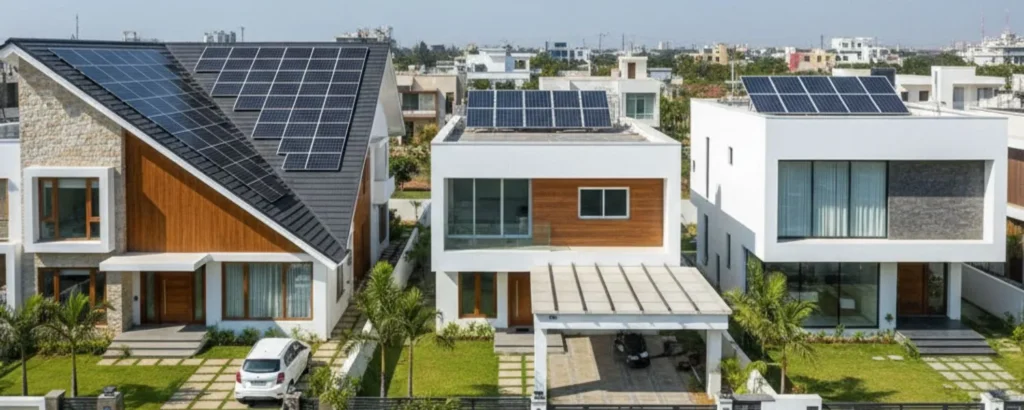
Solar power, as we all know, is an efficient and sustainable energy solution for homes and businesses. If you are considering installing solar power panels in the near future, you are making a smart choice. However, solar power technology has advanced drastically over the years. There are so many types of solar PV panels for homes based on energy requirements and other factors. Here, we will discuss the types of solar PV panels, how they work and how you can choose the right one in 2026.
How Do Solar Power Panels Work?
Solar PV panels work by capturing the sunlight into photovoltaic cells in solar panels, which generates a flow of current. However, we cannot use this current directly. This direct current (DC) generated from the sun is converted into usable energy (alternating current) to light up our homes. To simplify it for you, here is a breakdown of the process:
-
- Sunlight to DC: To generate electricity from the sun, we need the light particles called photons. When these photons come into contact with solar panels, the photovoltaic process happens which makes a flow of direct current (DC).
-
- Converting DC to AC: We primarily use alternating current in our home appliances as it allows long distance transmissions and is safer to use. To convert the direct current into alternating current, we use inverters. The current flows through this inverter and converts the voltage into alternating current.
-
- Powering the Home: The converted alternating current is connected to your home’s electrical panel or the breaker box, which lights up your home and operates all the appliances.
If there is excess power generated from the solar power panels, it is either stored in batteries or transferred back to the grid, earning you credits via net metering. You can use this excess energy during the power cuts or at night.
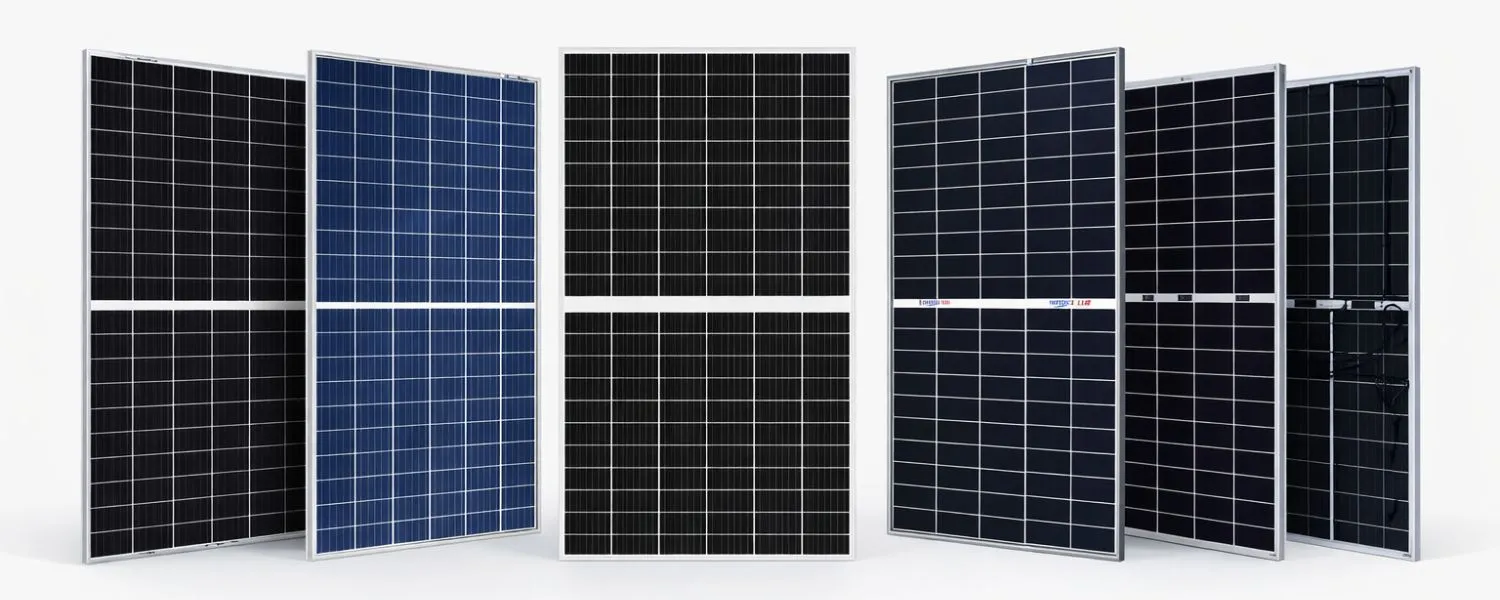
Types of Solar Power Panels Used in Homes
Now, let’s understand the different types of solar PV panel for home that you can consider as per your requirements:
Bifacial Solar Panels
Bifacial solar pv panels can harness sunlight from both the front and rear sides. This facilitates the collection of reflected light from the ground or other surrounding objects, thereby enhancing total energy output, particularly when there is the availability of reflective surfaces, such as light-coloured roofs or open areas.
Here are some features you need to know:
-
- Higher energy output than the conventional modules
-
- Better performance in reflective spaces
-
- Best for roofing and ground mounting applications
Mono PERC Half-Cut Solar Modules
Mono PERC half-cut solar panels are among the most popular choices for residential spaces. Their design reduces power loss and improves energy conversion, hence efficiency, even in partial shade or high-temperature conditions.
Here are some key features:
-
- Better conversion efficiency
-
- Lower internal resistance and improved reliability
-
- A balance between performance and cost
BIPV Solar Modules
The building-integrated photovoltaic modules are designed to be integrated into your home architecture. In other words, instead of having traditional rooftop panels, BIPV elements would turn into pieces of the structure itself: a roof tile or facade components.
Here are the features of these systems:
-
- Seamless integration with the building design
-
- Dual functions: structure and generating power
-
- Clean aesthetic appearance
Polycrystalline Solar Modules
Polycrystalline solar panels are reliable and cost-effective. They use many silicon crystals, simultaneously catching sunlight and converting it into electricity. Although they are a bit less efficient than the monocrystalline ones, manufacturing improvements have reduced this difference.
The features you need to know:
-
- Less expensive compared to some high-efficiency panels
-
- Performs well under intense sunlight conditions
-
- Perfect for larger roofs with sufficient space
N-Type TOPCon Solar Panels
N-Type TOPCon tunnel oxide passivated contact panels are among the most recent innovations in photovoltaic technology. These solar power panels provide much higher power output with better performance in low light conditions compared to conventional modules.
Here are the key features:
-
- Excellent performance with advanced cell technology
-
- Improved performance in varied lighting conditions
-
- An extended lifetime due to a lower degradation rate
Choosing the Right Solar Power Panel for Your Home
To choose the suitable option for your home, you need to consider certain factors:
Available roof space: If you have a limited roof area for PV panels installation, the N-type TOPCon and Mono PERC Half-Cut solar modules are best for you.
Budget and longevity requirements: If you have budget restraints but want a solar system that is durable, consider choosing mono PERC half-cut or polycrystalline solar modules. They include lower manufacturing cost and proven durability with minimum maintenance.
Energy requirements: If your household has high daytime load, panels with better low-light performance help maintain production throughout the day. The best option for you would be N-Type TOPCon solar panels that work efficiently in varied light conditions.
Aesthetic or design goals: Building Integrated PV modules will suit your home if the visual design of the solar panel is your priority. It allows the seamless integration of PV panels with the design of your building.
Inverter quality and technology: The inverter is the most critical determinant of the overall efficiency of your system. A high-quality inverter ensures that DC power generated by your solar power panels is converted to usable AC electricity at minimal loss. Advanced inverter technology further enhances system monitoring and long-term reliability.
In a Nutshell
Choosing the right solar PV panel for home is a critical decision. It involves substantial upfront costs and the knowledge of the technology behind the panels. Each panel type offers specific advantages, depending on roof space, energy consumption patterns, budget expectations, and long-term reliability.
By carefully assessing your needs and choosing solar PV panels that match your consumption and site conditions, you ensure a proper system that generates energy regularly and provides you with reliable savings. As the technology of solar power continues to evolve, knowing what to look out for when making today’s choice can ensure that your system is effective, resilient, and relevant for years to come.
Planning to install solar PV panels for home in 2026? Talk to a solar expert and avoid costly mistakes.
Frequently Asked Questions
How long does it usually take to install solar power panels for a home?
A standard residential installation typically takes two to four days, depending on roof complexity, electrical upgrades, and approval timelines from local authorities and utility providers.
Can solar PV panels for home work effectively during monsoon or cloudy seasons?
Yes. Modern solar power panels continue generating electricity in diffused light. While output reduces during heavy cloud cover, annual generation calculations already account for seasonal variations.
Do solar panels require frequent maintenance once installed?
Maintenance is minimal. Periodic surface cleaning and annual electrical inspections are usually sufficient to maintain performance, especially in dusty or high-pollution environments.
Will installing solar power panels increase my property value?
Homes with installed solar systems are often perceived as energy-efficient assets, which can positively influence resale value, particularly in areas with high electricity costs.
Is it possible to expand a residential solar system in the future?
Most systems can be expanded later if roof space, inverter capacity, and electrical infrastructure allow. Planning for future expansion during initial design helps simplify upgrades.