
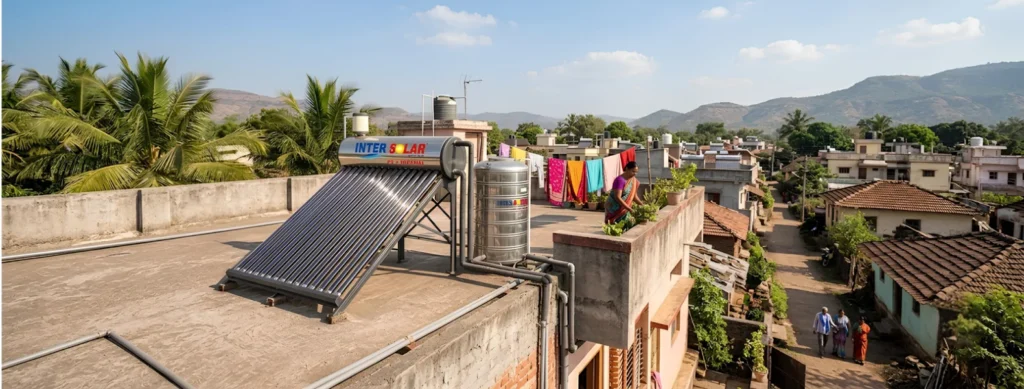
Solar water heater benefits are easy to see on paper: less reliance on electricity or fuel for hot water, lower operating costs, and reduced emissions. The difficult part is assessing whether these gains will make up for the expenses of installing the heater for your building in 2026. The answer will depend on many factors such as volume of water usage, available space for collectors, and the chosen type of system. This article will cover its effectiveness, expenses, and feasibility for residential and industrial purposes.
Why Reconsider Thermal Solar Now?
Hot water is a high and predictable operational load in many applications. Hotels, hospitals, laundries, and apartment buildings all use large quantities of hot water. The process of converting sunlight directly to heat is more thermodynamically efficient than converting sunlight to electricity and then to heat. This means that there are higher component efficiencies and lower system losses for a given amount of delivered heat. For many hot water-dominated applications, this makes a strong technical case for a solar water heater.
Solar Water Heater Collector Types and Performance
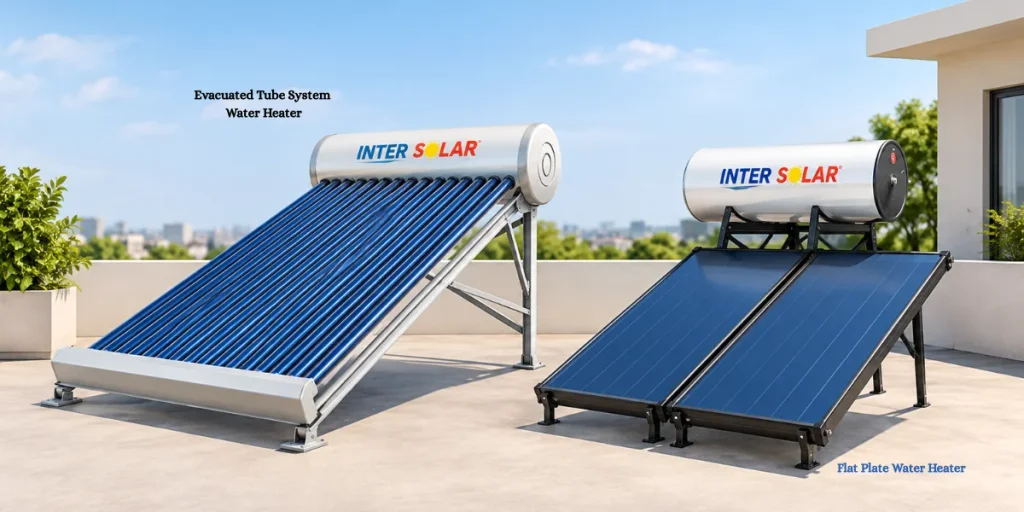
The collector is the component of the solar water heating system responsible for absorbing the sun’s energy. There are mainly two types of collectors: the flat-plate collector and the evacuated-tube collector. Both types vary in design and heat retention capacity; therefore, the ideal choice varies from one situation to another. Understanding the types of solar water heating systems will help you compare their performance before choosing a system.
Evacuated Tube Collectors
Evacuated tube solar water heater collectors perform best in low-temperature conditions or where diffused solar radiation is prevalent. They are better at retaining heat and generating greater temperatures with lower direct solar radiation.
Flat-plate solar water heater collectors are robust and economical. They are easy to set up and maintain. They provide outstanding performance and ROI for large areas with high direct solar radiation.
Economics: What Does a Realistic Payback Period Look Like?
A solar water heater can help you save energy required for heating water, but the payback time will depend on your specific hot water needs and present-day energy prices. First, estimate how much you are spending on water heating annually. After that, compare the cost of installing a solar water heater with the savings you would make, taking into account:
The system’s payback period is the time it takes for net savings to cover the additional upfront cost. For a household replacing an electric geyser, this Solar Water Heater vs Electric Geyser comparison offers a useful starting point. Instead of depending on the estimate for households, commercial and industrial applications must consider their own hot water consumption and power rates.
Policy and Incentives That Change the Numbers

National and state policies in India are still influencing the effective capital cost. Central policies and special initiatives for residential rooftop solar have helped increase the adoption rate. There are also BIS-approved lists of manufacturers and products, which assist consumers in lowering the risks of procurement. When you design your project, you should consider the central subsidy, state incentives, and distribution company schemes. In certain scenarios, these incentives can significantly reduce the payback period and enhance the IRR of the project.
Where Are Solar Water Heater Benefits Strongest?
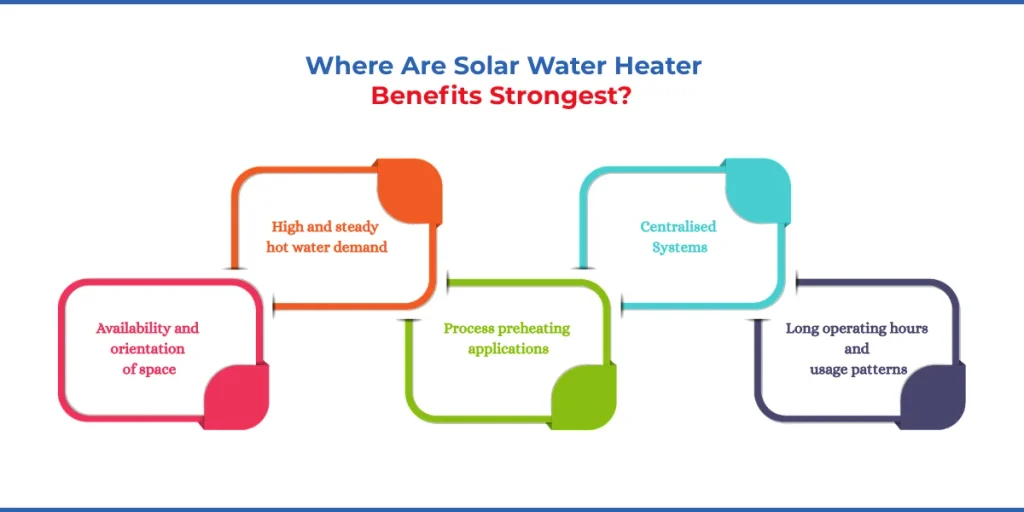
The application of solar water heaters is effective where the use of hot water is high, and there is enough sunlight to hit the collector. The design of the roof, the tank volume, and the ability to connect to the building’s plumbing system become important factors rather than just the type of property.
For residential houses, the installation of solar water heaters for home is an option if the house has enough space on its roof and uses hot water frequently. A preliminary survey could determine the size of the system and whether additional heating is required.
High and steady hot water demand
Hot water demand with a steady daily demand is the most obvious opportunity. Since the volume, peak hours, and temperature are known, the solar component can be properly sized. This eliminates oversizing, improves collector efficiency, and reduces reliance on auxiliary heating.
Centralised systems
Hot water systems with centralisation make solar hot water integration even more effective. Rather than having to manage dozens of electric geysers, a centralised solar hot water system can supply multiple floors or buildings. This eliminates redundancy and improves overall system efficiency.
Availability and orientation of space
Solar water heaters work best when the solar collectors are mounted on broad, unobstructed roof areas that receive ample solar radiation. Office buildings, factories, hospitals, and high-rise residential buildings have flat roofs that are ideal for mounting solar collectors.
Process preheating applications
Industrial processes that demand warm feed water can be efficiently preheated using solar energy. Processes like boiler feed water, cleaning lines, food processing, and textile mills require water at moderate temperatures before the final heating process. Solar energy can provide this preheating effectively, thereby reducing the demand for primary fuel in the subsequent process.
Long operating hours and usage patterns
The longer the operating hours of the building, the greater the benefit of solar water heating. Hospitals, schools, and industries require hot water throughout the day, which can be utilised continuously from solar water heating, as opposed to being stored for a longer period of time. This increases the efficiency of the system.
When all these factors fall into place, the advantages of solar water heater system installations become both attractive and quantifiable. Solar water heating systems can become a core strength, rather than a secondary sustainability initiative.
Specification and Procurement Best Practice
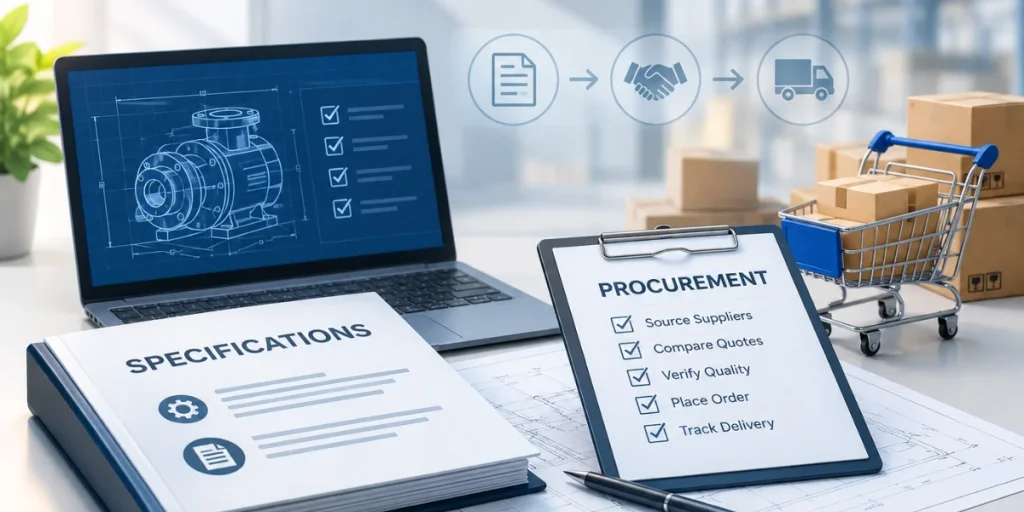
Procurement should be based on quantitative requirements and proven product performance. When choosing the right solar water heater in India, buyers should consider certification, performance data, warranty coverage, installation requirements, and after-sales support.
A staged approach works well. Pilot a single wing or a defined process line. Measure yield and actual solar fraction. Use the data to scale with confidence.
Operation, Maintenance and Reliability of Solar Heating Systems
Solar heating systems do not need heavy maintenance and are easily manageable with regular service. The list of routine maintenance activities includes:
A minimum service contract with two seasonal visits and annual performance verification will help maintain system efficiency and system life.
Practical Risks and Mitigations
Here are some common risks associated with the system:
- Over-optimistic energy yield assumptions inflate expected savings. Mitigate with measured insolation and conservative performance factors.
- Poor installation or non-certified parts increase long-term costs. Mitigate with certified suppliers and structured QA during installation.
- Thermal stratification and distribution losses can reduce delivered heat. Mitigate with correct storage sizing and insulated distribution networks.
Final Words: Solar Water Heater Benefits in 2026
In cases where there is continuous demand for hot water in commercial buildings and residential complexes, a solar water heater may become a profitable venture. The installation of a solar water heater will help save on the cost of energy used to heat water.
There are factors that should be taken into account when making such an analysis. Hot water use should be estimated using conservative figures, and all the costs involved should be considered. Where demand is high and consistent, the solar water heater benefits are more likely to justify the upfront investment.
Frequently Asked Questions
1. What are the main solar water heater benefits for homes and businesses?
The main solar water heater benefits include lower energy costs, reduced reliance on electricity or fuel, lower emissions, and efficient hot water production. They are especially valuable for buildings with high and consistent hot water demand.
2. How does a solar water heater compare with an electric geyser?
A solar water heater uses sunlight to heat water, which can reduce electricity consumption and operating costs. An electric geyser relies primarily on electricity and may have higher running costs. The right option depends on hot water demand, roof space, installation costs, and backup heating requirements.
3. How do I choose the right solar water heater in India?
When choosing the right solar water heater in India, consider your daily hot water requirement, available roof space, sunlight exposure, collector type, storage capacity, certification, warranty, installation requirements, and after-sales support.