
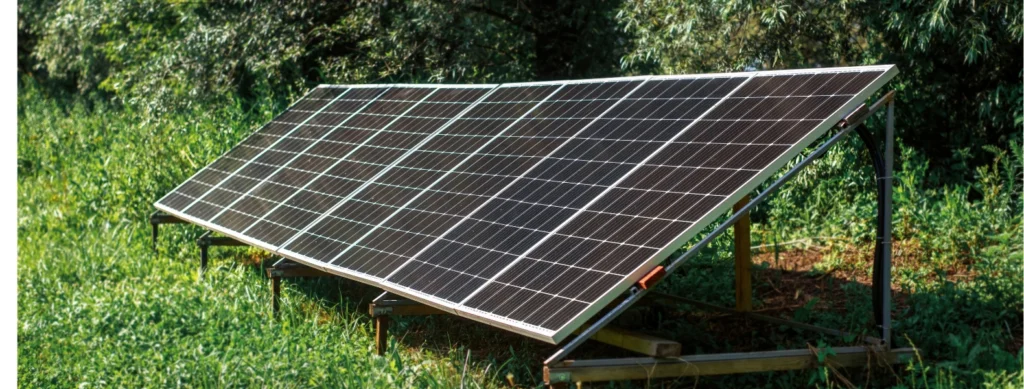
The on-grid solar power system works by connecting the roof-mounted solar panels to the electrical grid. It produces energy during the day and feeds the extra energy produced back into the power grid using net metering, and pulls energy from the power grid at night. Therefore, it is one of the cheapest solar systems available in India for residential and commercial purposes. No batteries are required for the on-grid solar plant.
Key Takeaways
- An on-grid solar plant connects your rooftop directly to the utility grid.
- No battery is required in an on-grid solar power system compared to hybrid and off-grid systems.
- The PM Surya Ghar scheme offers a central subsidy up to ₹78,000.
- The best capacity for solar grid for homes in India would be 3 kW.
- Return on Investment usually occurs within 3 to 5 years of installation.
- Net metering lets you earn credits for excess power you export.
- Choosing a trusted solar manufacturing company in India will help secure your investment.
What Is an On-Grid Solar Power System?
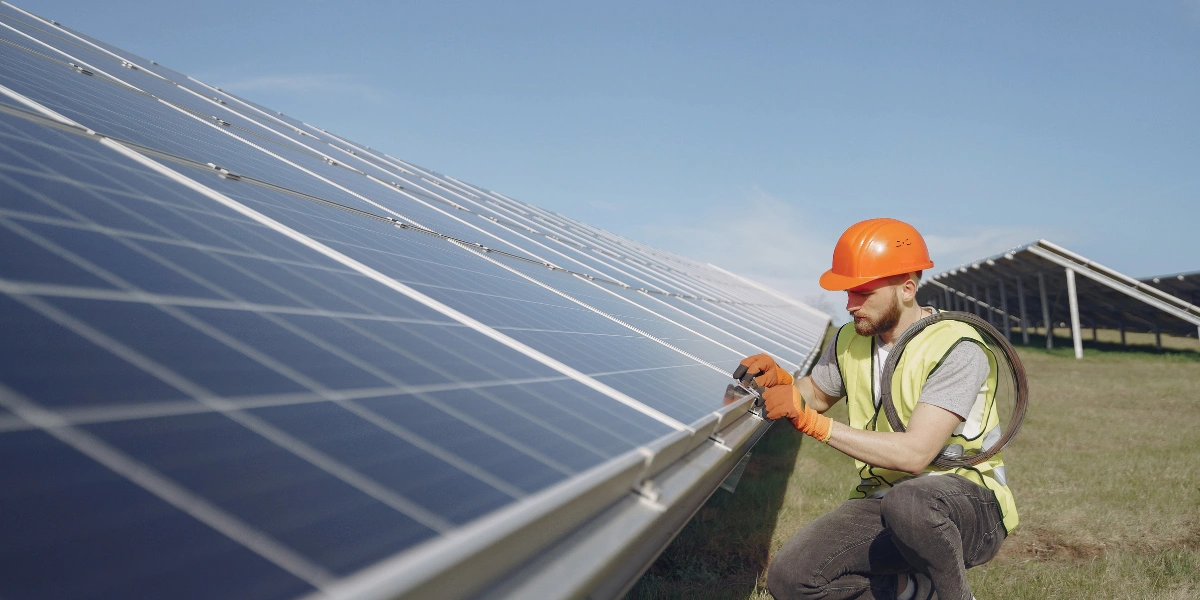
The on-grid solar power system, otherwise known as a grid-tied system, directly connects the panels to the existing power grid of your area. Sunlight strikes the panels and creates direct current (DC) electricity. An inverter then converts this DC power into usable alternating current (AC). Your home uses this power first.
The remaining energy goes back to the electric grid through the bidirectional net meter. During nighttime or periods when the panels are producing less, you simply draw power back from the grid. Since there is no use of a battery here, this on-grid system is different from off-grid and hybrid systems.
How Does an On-Grid Solar Plant Work?
Understanding the working helps you choose the right on-grid solar plant for your roof.
- Solar panels gather energy from the sun and produce DC power.
- The inverter transforms the DC power into AC power.
- Your appliances will first make use of this AC power to reduce dependence on the grid.
- The excess units move to the net meter and then to the grid.
- At nighttime, the system automatically draws power from the grid.
- The anti-islanding protection automatically shuts off the system during a blackout.
What Are the Key Components of an On-Grid Solar System?
Every reliable on-grid solar power system depends on a few core parts.
| Component | Function |
|---|---|
| Solar panels | Convert sunlight into DC electricity |
| Solar inverter | Converts DC power into usable AC power |
| Net meter | Tracks power exported to and imported from the grid |
| Mounting structure | Holds panels securely on your rooftop |
| Cables and combiner boxes | Connect panels safely to inverter and meter |
Selecting components from a trusted solar manufacturing company in India will reduce the frequency of malfunctions and increase long-term output.
What Are the Benefits of an On-Grid Solar Power System?
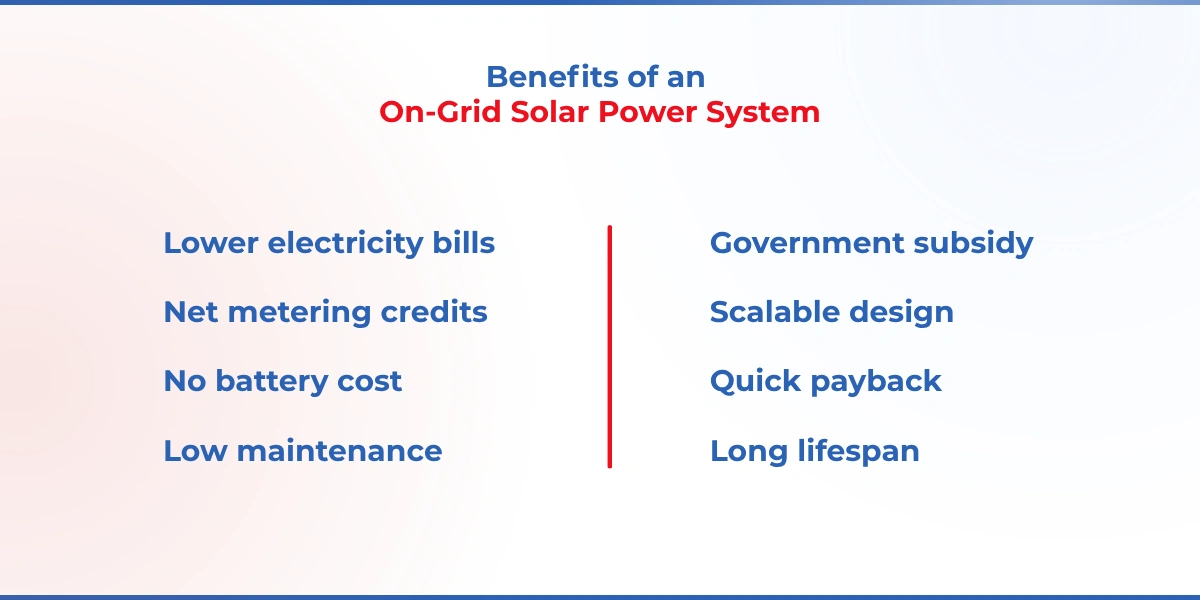
Homeowners across India choose grid-tied systems for several practical reasons.
- Lower electricity bills: Solar energy reduces grid-based consumption to a large extent.
- Net metering credits: Any extra units will get you credits against future electricity bills.
- No battery cost: There is no need for batteries and subsequent replacements.
- Low maintenance: All you need is occasional cleaning and an annual checkup.
- Quick payback: Most systems pay for themselves in 3 to 5 years.
- Government subsidy: The PM Surya Ghar scheme will cut down your upfront costs.
- Long lifespan: They work effectively for up to 25 years, provided proper maintenance.
- Scalable design: Expand your system as your demands increase in the future.
Off-Grid and On-Grid Solar: What Is the Difference?
Many homeowners confuse off-grid and on-grid solar systems before choosing one.
| Feature | On-Grid Solar System | Off-Grid Solar System |
|---|---|---|
| Grid connection | Yes | No |
| Battery required | No | Yes |
| Government subsidy | Available | Not available |
| Works during power cuts | No, shuts down for safety | Yes, runs on stored battery |
| Best suited for | Areas with reliable grid supply | Remote or unreliable grid areas |
| Overall cost | Lower | Higher, due to battery expense |
Therefore, solar off-grid or solar on-grid – which is better for you? If you live in an area where the grid is stable, go for an on-grid solar power system. Otherwise, think about using a hybrid or off-grid one.
What Is the On-Grid Solar System Price in India?
The on-grid solar plant price depends on system size, city, panel quality, and inverter type. Here is an indicative price range before subsidy, based on current industry data.
| System Size | Approximate Price (Before Subsidy) | Central Subsidy |
|---|---|---|
| 1 kW | ₹45,000 – ₹75,000 | ₹30,000 |
| 2 kW | ₹90,000 – ₹2.15 lakh | ₹60,000 |
| 3 kW | ₹1.8 lakh – ₹2.5 lakh | ₹78,000 |
| 5 kW | ₹2.5 lakh – ₹3.85 lakh | ₹78,000 |
| 10 kW | ₹5.75 lakh – ₹6.5 lakh | ₹78,000 |
Some states also give additional subsidies in addition to the existing central government subsidy. Uttar Pradesh offers ₹15,000 per kW for systems up to 2 kW, and ₹30,000 for systems of 2 kW and above. Delhi offers ₹10,000 per kW, up to a maximum of Rs. 30,000 per kW.
How to Install an On-Grid Solar Power System?
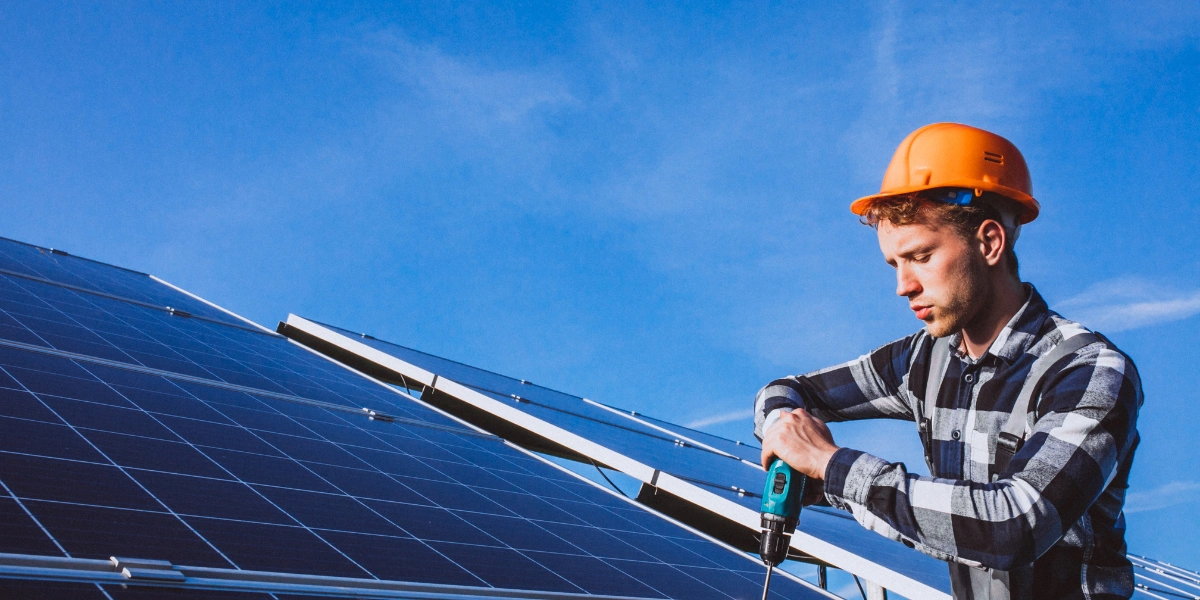
Installation is not a do-it-yourself affair. It requires specialised engineers as well as MNRE-approved components. Below is the standard installation process.
- Site Assessment: The engineer inspects your roof for any shading and orientation.
- System Sizing: Your total daily energy consumption will determine the right capacity.
- Mounting Setup: Rust-resistant mountings are firmly attached to the rooftop.
- Panel and Inverter Installation: Solar panels connect to inverters through combiner boxes.
- Net Meter Installation: DISCOM installs a bi-directional meter in your home for billing.
- Earthing Protection: Earthing rods protect the system from electrical faults.
- Testing and Commissioning: Engineers verify wiring and settings before switching on the solar system.
The entire process, from booking to commissioning, usually takes 4 to 8 weeks, including permits and DISCOM approval.
Things To Consider For An On-Grid Solar Plant
- Roof Space Required: A 1 kW system needs 80 sq. ft. of shade-free space.
- Annual Energy Production: A 3 kW system generates around 4,200 to 4,350 units annually.
- Degradation Rate: Solar panels degrade at a rate of about 1% annually, so output drops slowly.
- Panels’ Orientation: South-oriented panels, angled at your latitude, capture the most sunlight.
- Approval Process: The net metering approval process may take a few weeks after installation.
- Significance of AMC: An annual maintenance contract ensures efficiency and detects faults at an early stage.
How to Choose the Best Solar Panel Company in India?
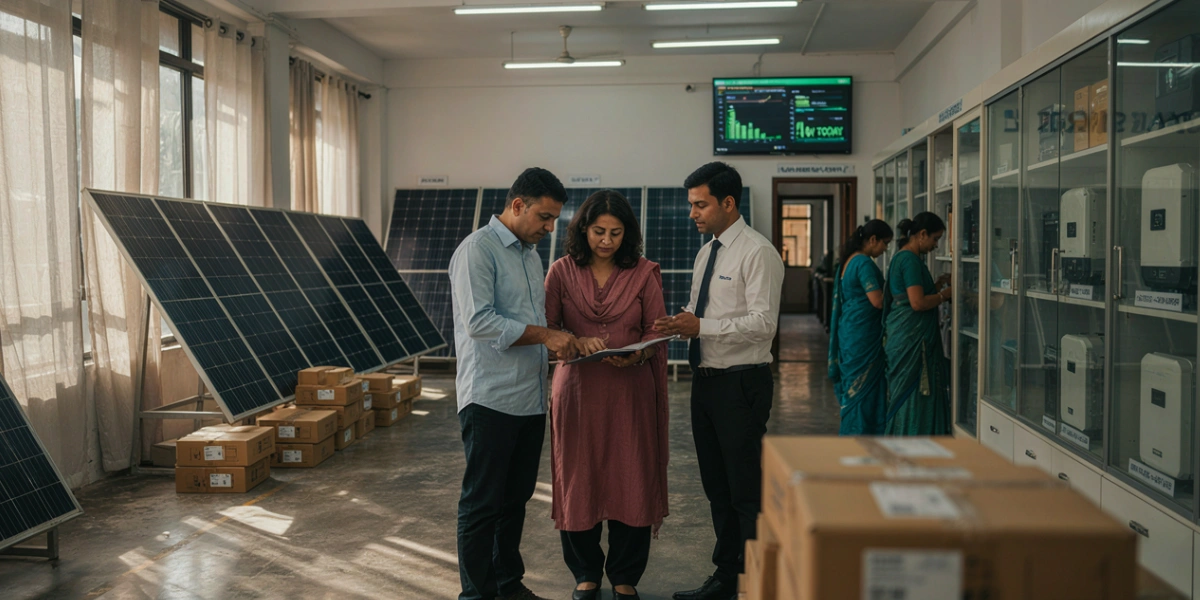
Partner choice is as important as choosing the system itself.
- Find out the years of experience and successful installations before selecting a solar grid for home.
- Prefer a leading solar manufacturing company in India that makes its own solar panels and does not just sell them.
- Confirm MNRE approval and DCR-compliant panels for subsidy eligibility.
- Go through customer reviews when signing up with the best solar panel company in India.
Conclusion
An on-grid solar power system remains India’s most practical way to cut electricity bills and go green. Due to government incentives, low maintenance costs, and a payback period of only 3 to 5 years, this type of solar power system is suitable for almost all houses and offices. Therefore, select a professional installer, properly calculate the size of the system, and reduce your power bills now.
Frequently Asked Questions
Does an on-grid solar system work during a power cut?
When there is a power outage, the system will automatically turn off because of anti-islanding protection for safety purposes. Anti-islanding ensures the safety of utility workers who repair the grid lines. Hybrid systems equipped with batteries provide energy when there is a failure of the grid.
How long does an on-grid solar power system last?
The typical lifespan of systems is 25 years if installed and maintained correctly. Loss in performance per year is about 1%. Proper cleaning, regular maintenance, and a good after-sales contract contribute to efficient system functioning.
Does the subsidy apply to all types of solar panels?
No. The PM Surya Ghar subsidy applies only to DCR-compliant, domestically manufactured panels installed by MNRE-empanelled vendors. Therefore, always confirm panel compliance with your installer first.
Can I get a loan for an on-grid solar plant?
Yes. Several banks as well as non-banking financial companies provide solar energy loans with flexible repayment options in the range of 6 to 60 months. Additionally, this reduces your upfront investment significantly.