
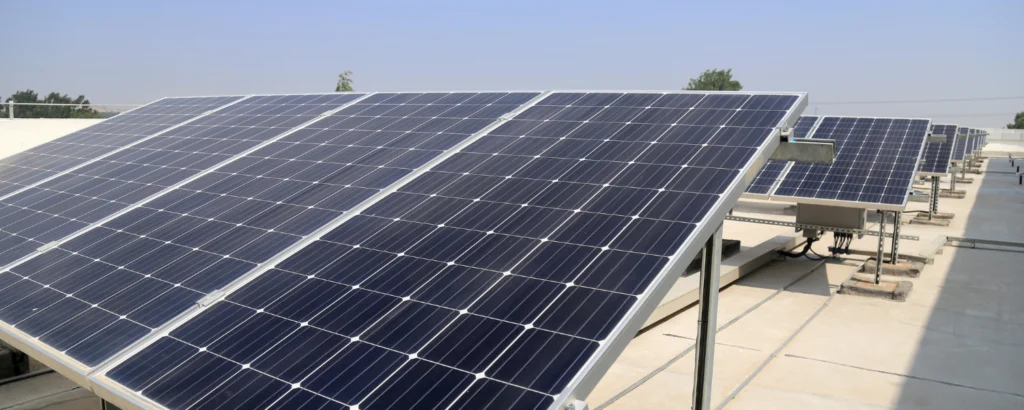
Step outside on a sunny day, and you will find the sun shining bright. The real question is, is it shining bright enough to provide the power the solar panels need for proper functioning? You will shortly have all the answers.
Solar energy is definitely the backbone of India’s renewable future. In fact, India aims to generate 75% of its electricity from renewable sources by 2050. However, what homeowners should never overlook is sourcing high-quality solar PV panels from leading solar panel manufacturers in India. And still, it’s just half a story. Because the direction and the tilt of your panels quietly decide how efficiently the panel can generate energy.
Let’s decode it in a simple and practical way so that you can make the right choice for your home.
Why Panel Direction Really Matters
Solar panels convert sunlight into electricity, so the more sunlight they receive, the more power they generate. Based on this principle, panels capture maximum sunlight throughout the day when they face the right direction. When it is followed, the efficiency of the panels is the highest. This leads to better savings and a quicker return on investment.
On the other hand, when the orientation is poor, output reduces significantly, and even the best systems can fail to perform their best.
For any top solar manufacturing company in India, offering high-quality panels is important. But the true test of their functioning depends on how and where the panels are installed.
South-Facing Panels: The Gold Standard
A solid answer to “Which direction is best for a solar panel?” is in the south direction. The reason behind this is that India lies in the Northern Hemisphere, where the sun spends most of its time.
Why South-Facing Direction Works Efficiently
- Maximum Energy Output: South-facing panels can achieve nearly 100% of their working potential.
- Peak Hours of Sun Exposure: Panels facing south receive more balanced sunlight throughout the day. This helps in consistent power output.
- Better Year-Round Performance: During the Indian winter, south-facing panels receive more sun exposure because sunlight loss is lower than in summer.
- Faster Payback Period: Since higher solar energy output from south-facing panels cuts down the reliance on grid electricity, it pushes a faster return on investment.
For the majority of homeowners aiming to reduce long-term energy bills, they must consider the south direction. That is why many experts and the choicest solar panel manufacturers in India recommend a south-facing direction.
East-West Facing Panels: Smart Alternatives
Understandably, not every household can have the perfect south-facing orientation for panel installation. That’s where east and west-facing panels can be the next smart alternative. Yes, they can cover up the south-facing solar panel installation, but it’s an alternative at the end of the day.
They produce 10% to 15% less energy than the south-facing systems, but they can align with daily power needs.
East-facing and west-facing solar panels are effective and practical options for Indian homes. Both support power generation at different times of the day and maintain smooth functioning. East-facing panels begin producing energy from the early morning hours. At the same time, west-facing panels support generation in the later part of the day.
Therefore, both orientations can work well depending on the power usage of a household. Rather than treating one as better than the other, they both are reliable directions to cover daily power needs and improve overall solar utilisation. In fact, together they are well-engineered for a balanced electricity supply throughout the day.
Although total energy production is slower than south-facing panels, east and west-facing systems are flexible between peak hours. This makes them financially attractive in certain scenarios.
The Often-Overlooked Factor: Tilt Angle
Yes, direction is a very important factor in optimising energy production, but tilt as a factor can’t be ignored. A well-angled panel ensures sunlight hits the surface directly, which improves the efficiency of the panels. Let’s look at some of the ideal tilt angles across Indian states.
|
Region |
Recommended Tilt |
|
North India (Delhi, Lucknow, Jaipur, Punjab) |
25° – 30° |
|
West/Central India (Mumbai, Pune, Ahmedabad) |
18° – 24° |
|
South India (Chennai, Bengaluru, Hyderabad) |
12° – 18° |
Seasonal Tilt Adjustments
Seasons also dictate the tilting of the panels. For instance:
- Summer: To capture more sunlight during peak sun hours, slightly flatter angles by 5° to 10° less than the latitude are ideal.
- Winter: During winter, when the sun is lower, steeper angles of 5° to 10° more than the latitude are preferred.
While most residential systems use fixed angles, leveraging this concept can take you ahead in terms of savings and reducing your carbon footprint.
Key Factors That Influence Your Decision
Your home plays the biggest role in making the right choice between south-facing and east-west-facing panels. Let’s know all of them.
1) Roof Direction & Design: If your roof does not face south, installers can install mounters to adjust the direction of the panels. But the downside is increased cost and complexity.
2) Shading Conditions: Any user should be careful with the placement of the panels. They must ensure that panels are positioned shadow-free between 9 AM and 3 PM. Also, note that even the slightest continuous shadow can reduce the output.
3) Roof Strength: Your roof must be capable of supporting the additional weight that comes with solar system installation.
4) Avoid North-Facing Panels: North-facing panels are not meant for a region like India. If installed, their output is reduced by up to 30%, making it a really poor investment.
Practical Solar Panel Installation Tips for 2026
You can get the best solar panel system installed, but if it is not in the right direction, it is a complete waste. Here are some of the essentials:
- Maintain Proper Row Spacing (Panels should not cast shadows on each other, especially during winter.)
- Allow ventilation (keep a 4 to 6-inch gap between the roof and panels to prevent heat buildup).
- Clean Panels at Regular intervals (Cleaning keeps the performance of the panels consistent)
- Work with Experts (Choosing an experienced and trusted solar panel manufacturer in India ensures correct design, layout, and long-term reliability.)
Final Thoughts
Solar power can no longer be considered just a power-saving upgrade. Yes, it solves that purpose too, but it is a long-term investment in your home. Before you make any decision, consult a professional to understand the design and its performance. A reliable solar manufacturing company in India will help you with everything, from design to installation. Because when it is about solar, we want exceptional, not average.
FAQs
Q1) What should my roof be like before solar panel installation?
Before solar panel installation, your roof must be strong enough to carry the weight of the panel systems. Also, the mounting structures must be durable and rust-resistant to prevent
the wrong panel angle and reduce performance over time.
Q2) Why is the ventilation gap important for solar panels in India?
The ventilation gap helps remove hot air trapped under the panels. This keeps the panels cooler during peak sun hours. Since India’s climate is usually hot, the ventilation gap allows the system to perform better.
Q3) Can panels be redirected if my roof faces the wrong way?
100%, the direction of the panels can be tilted towards the south using mounting structures. Although this increases the installation costs, their performance remains high.
Q4) Do solar tracking systems produce more power than fixed panels?
Yes, solar tracking systems can generate more power because they move along with the sun during the day. Also, a dual-axis tracking system can generate even more energy than the fixed system. Interestingly, they can track real-time weather-responsive self-cleaning mechanisms in PV panels. However, these systems are expensive and not commonly found in households.