
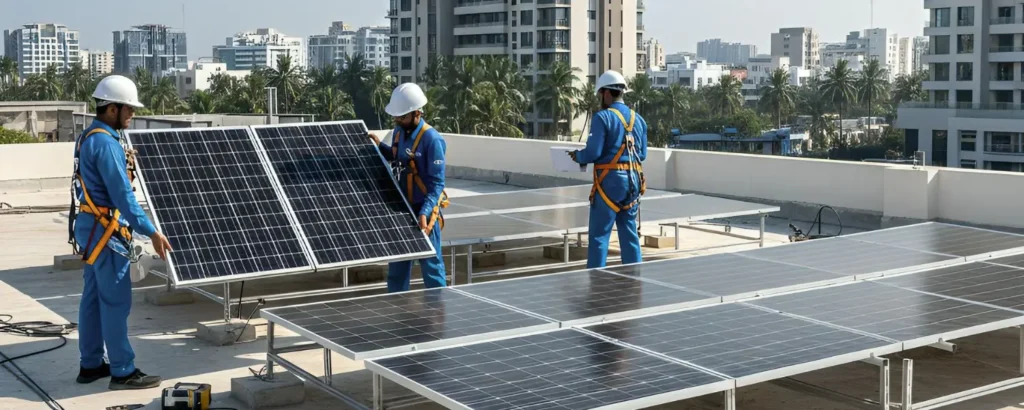
Solar energy is no longer a secondary power option or an experimental upgrade. It’s a long-term infrastructure decision for homes, offices, factories, warehouses, and large commercial facilities. As solar adoption matures, buyers are no longer comparing solar versus non-solar; they’re comparing technologies within solar itself. It is here that the discussion gets a bit more complex: not all projects have the same type of panel. Some projects involve design integration, while others rely on long-term performance stability. Today’s Solar power panels in India have been developed to meet just such differences.
Let’s understand how they work out in real conditions, so that you can make confident decisions that are future-proof.
Why Modern Solar Panel Selection Matters More Than Ever
Installing a solar power system for business or home is a very long-term decision. Once mounted, panels are expected to perform day in and day out for 25 years or more, very often in very demanding environmental conditions. The technology chosen at the beginning directly shapes energy output, maintenance needs, and financial returns for decades.
The major requirement for modern solar projects is the need for panels that can:
- Increase the amount of energy from the same surface area
- Handle extreme heat without heavily dropping performance
- Maintain steady efficiency over several years
- Support predictable return on investment
This becomes of specific relevance while reviewing solar power panels in India due to the high heat, dust, and seasonal variation in weather, which further puts systems under additional stress. Lesser or basic technologies of panels could suffer in these kinds of conditions. Advanced panels are designed to provide consistent performance in the real world, not just in a test setting.
How Solar Power Panels Generate Electricity
On a very basic level, all solar power panels have the same function. They use photovoltaic cells to convert sunlight into electricity. The difference lies in how well and how dependable the conversion actually occurs.
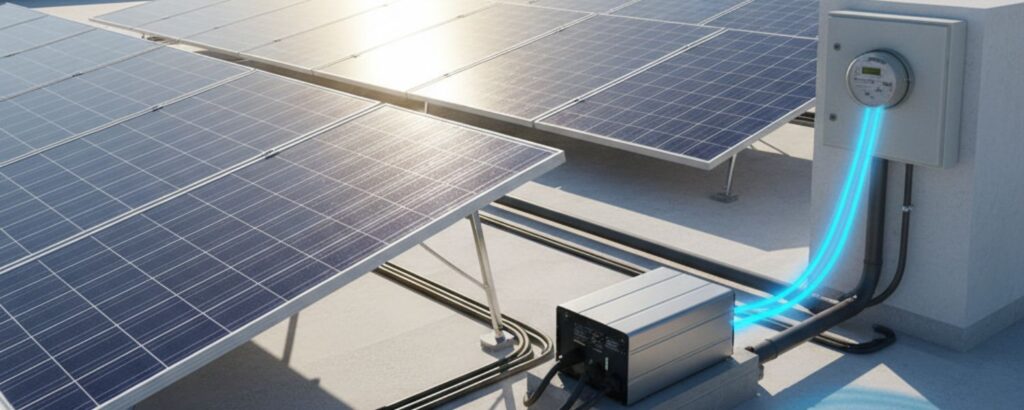
The basic process in this regard will involve:
- Sunlight striking photovoltaic cells
- Cells that produce direct current electricity
- An inverter converts DC into usable AC current
- Electricity powering appliances, machines, or feeding the grid
Modern solar cells are better than earlier versions as they minimise losses and optimise the movement of electrons in the solar cell structure. The benefit is that solar cells work better and are less degraded, and their performance is superior in hot and low-light environments. Eventually, there is a marked difference in energy production and savings.
N-Type TOPCon Solar Panels
N-Type TOPCon solar cells are among the most cutting-edge technologies available in the solar industry. The cells are based on the application of N-type silicon along with a Tunnel Oxide Passivated Contact, and the design helps in overcoming the prevailing energy loss in the cell.
What distinguishes N-Type TOPCon panels is their stability. This is in contrast to traditional P-type solar panels, which degrade significantly due to light-induced degradation. This impacts the efficiency of the panels, causing them to go down over the years.
Main benefits include:
- Higher energy conversion efficiency
- Extremely low level of annual degradation
- Performance under high-temperature conditions
- Improved performance under low-light conditions and cloudy weather
It is due to these qualities that N-Type TOPCon solar panels are gaining popularity as home solar power systems as well as for commercial use, where long-term performance is considered more essential than short-term performance.
Bifacial Solar Panels
Bifacial solar cells are made to accomplish more work in the same area. Unlike other solar cells that produce energy only on one side, bifacial solar cells produce energy on both sides, even on the reflective side of the solar cells.
The reflected light can be from:
- Roofing surfaces
- Concrete floors
- Light-colored ground or gravel
- Open industrial types
The advantages offered by bifacial panels include:
- More total energy output
- Improved usage of installation space
- Strong performance in open and reflective environments
- High compatibility with elevated mounting structures
Bifacial solar panels work best in commercial and industrial projects. When considering a solar power solution for a business, bi-facial technology is useful in helping the system produce maximum power on an economic scale.
Mono PERC Half Cut Solar Panels
The Mono PERC Half Cut solar panels provide a good balance between efficiency, reliability, and costs. The panels have monocrystalline cells and are based on Passivated Emitter and Rear Cell (PERC) Half Cut technology.
The half-cut technology ensures reduced electrical resistance in the panel. This ensures that there are no losses when the panel is in use. The technology also ensures efficient functioning when the panel is partly shaded.
It features:
- Greater efficiency than conventional mono solar panels
- Lower power loss with half-cut architecture
- Enhanced heat tolerance
- Better shade management and durability
Mono PERC Half Cut solar panels work under a variety of conditions and are thus ideal to be used as a home solar panel system as well as on commercial establishments. For a customer looking for a solar power system for business on a budget, Mono PERC Half Cut cells are a robust option.
BIPV Solar Modules
Building-integrated photovoltaic systems, more commonly referred to as BIPV solar modules, use a different approach in thinking about solar. Instead of adding panels onto a structure, BIPV modules become part of the building itself.
They can be integrated into:
- Facades of buildings
- Roof structures
- Skylights and Atriums
- Canopies and shading systems
BIPV modules combine dual functions in one. They generate electricity while they become elements of architecture. This reduces the need for separate materials and allows solar to blend in with the building design.
BIPV solar modules have a particular appeal to commercial buildings, premium residential projects, hotels, and corporate offices, where aesthetics are just as important as sustainability. In design-driven projects, BIPV represents an avenue to embed energy generation in a manner that would not compromise on aesthetics.
Comparing the Different Solar Power Panel Systems in Real-Life Applications
All these solar panel systems have been designed to solve various project demands.
- N-Type TOPCon cells place more emphasis on high efficiency and stable output over a long period.
- Bifacial cells use the reflected light for maximum production.
- Mono PERC Half Cut Solar Cells meet performance requirements while maintaining reliability and affordability.
- BIPV Solar Module integrates Energy Generation with Architectural Integration.
There is no one-size-fits-all best solution. The best fit depends on space, energy use, and economic planning. It is necessary to comprehend these factors to prevent economic cost and the underutilization of system capabilities.
Selecting the Best Solar Cells for Home Rooftops
There may be constraints on the home solar panel system in terms of available rooftop space and energy demand. The effect of every panel has to be counted on.
Modern panels benefit homeowners in the following ways:
- Produce more power from smaller roofs
- Operation in stable conditions during summertime
- Lower dependence on mains electricity
- Enhance long-term savings.
For residential use, high-efficiency variants like N-Type TOPCon and Mono PERC Half Cut Cell technology are generally preferred. This technology ensures optimal results without requiring so many roofs on which to perform.
Choosing the Right Solar Power Panels for Commercial and Industrial Projects
Commercial and industrial solar projects are driven by performance consistency and financial returns. Energy generation must align with operational demand and long-term planning.
A well-designed solar power system for business benefits from:
- High-output panels that maximise available area
- Technologies that perform well under continuous load
- Predictable energy generation for financial forecasting
Bifacial panels and TOPCon systems are particularly effective in large industrial environments where reflective surfaces and open layouts enhance performance. These technologies help businesses achieve better yield without expanding system size.
Solar Power Panels in India and Long-Term Reliability
India’s climate creates unique performance challenges. High ambient temperatures, dust accumulation, and seasonal weather shifts all influence solar output.
Advanced panels used in solar power panels India are built to handle these realities. Technologies like TOPCon and bifacial systems offer stronger heat tolerance, lower degradation, and more consistent energy generation over time. This makes careful technology selection essential for long-term reliability.
How Buyers Identify the Best Solar System Company in India
Choosing the right technology is only one part of a successful solar project. Execution and support matter just as much.
The best solar system company in India typically focuses on:
- Understanding real energy requirements
- Matching technology to site conditions
- Designing systems for long-term performance
- Providing dependable after-sales support
A consultative approach ensures that buyers invest in systems that deliver measurable value rather than just theoretical efficiency.
Making the Right Solar Power Panel Choice for Lasting Value
Solar works best when it is treated as long-term infrastructure, not a quick upgrade. Advanced panel technologies provide higher efficiency, better durability, and stronger confidence in performance over decades.
By selecting the right combination of N-Type TOPCon, Bifacial, Mono PERC Half Cut, or BIPV solar modules, buyers can build systems that align with energy goals, space constraints, and future growth.
When thoughtful technology selection is paired with proper system design, solar power delivers consistent, reliable value year after year.
Frequently Asked Questions
Panel orientation determines how evenly sunlight is captured throughout the year. South-facing installations generally deliver balanced annual output, while tilt angle adjustments can improve winter generation and reduce seasonal performance dips in residential and commercial systems.
Yes. Some technologies are more tolerant to dust, heat, and partial shading. Maintenance frequency depends on surface coatings, frame design, and installation height, making system design and site conditions as important as panel type itself.
Most systems can be expanded if the inverter capacity, structural load, and electrical design allow it. Planning future scalability during initial installation helps avoid compatibility issues and additional costs when energy demand increases later.
Inverters influence how efficiently generated power is converted and managed. Factors like string configuration, load patterns, and monitoring features affect system performance, fault detection, and long-term operational stability beyond panel efficiency alone.
Monitoring systems provide real-time performance data, helping identify losses from shading, dirt, or equipment faults. Over time, this visibility enables better maintenance decisions, improves uptime, and protects the financial returns of both home and business solar installations
Get A Free Quote Today