
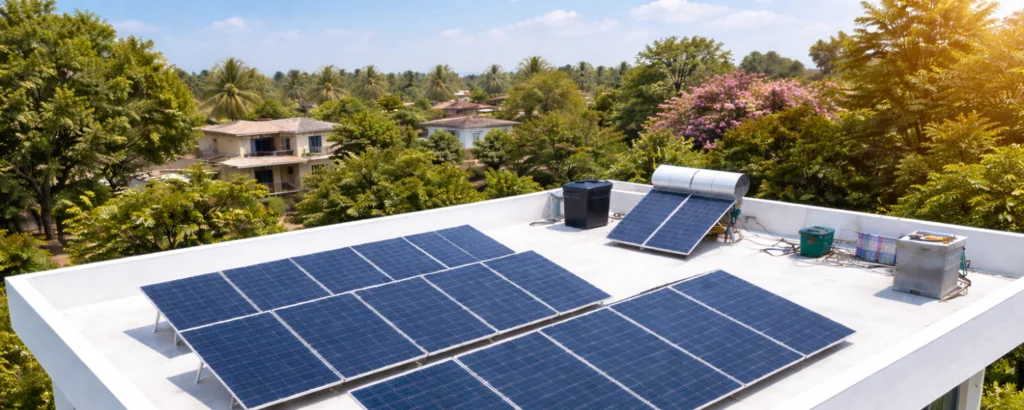
Solar PV panels technology, powered by the sun, has given birth to “clean energy.” While it comes with its own set of lucrative benefits, it is not far from some engineering challenges. Solar panels solely depend on the sun to generate power, but prolonged exposure to UV rays hampers their performance. It is among the major contributors that influence the long-term performance of the panels.
Homeowners and businesses that want to invest considerably in solar panel installation should also be aware of the care that it requires to be durable and effective. So, solar panel maintenance services can increase the age of the system for years to come. Any leading solar manufacturing company in India ensures to deliver panels that can thrive under any harsh climate.
What Happens in Solar Panel Degradation
As the name suggests, solar panel degradation refers to the slow reduction of a panel’s primary ability to convert sunlight into energy. Reports suggest that panels can lose around 0.5% of their efficiency annually. Gradually, this results in detectable but manageable deterioration. The noticeable decline in the functioning has been 10% after 20 years, and it increases if ignored.
Although the degeneration is unavoidable, the rate at which the solar PV panels degrade depends on the following factors:
- Quality of the panel
- Environmental exposure
- Frequency of solar panel maintenance services
However, note that solar panels from the best solar manufacturing company in India will ensure a slower degradation process.
What is the Mechanism of UV Degradation?
Ultraviolet rays or UV radiation affect the materials used to make the panels at a micro level. After consistent exposure to harsh UV rays, the chemical structure of components begins to change. Component alterations in silicon cells or protective coatings lead to reduced photoconductivity. Photoconductivity is directly responsible for impactful power generation.
The first phase of sun exposure to the panels is important. In the initial few months, the panels undergo a stabilisation period where efficiency goes down before levelling off. But this early adjustment is normal in the panel’s lifecycle.
Thing to Know: Panels typically see a 1–3% drop in efficiency. In extreme cases, it can go up to 10%.
What is Light-Induced Degradation & Its Types?
Light-Induced Degradation means a solar panel loses some of its efficiency to produce electricity due to exposure to sunlight. Also, it experiences different forms of light-induced stress once exposed to the sun. The three types of light-induced degradation are as follows:
1) Light-induced Degradation (LID): This occurs shortly after the panel installation. It causes a small but immediate drop in efficiency when p-type silicon cells react with boron-oxygen.
2) Direct Light-Induced Degradation (DLID): When panels are exposed to high temperatures and direct light, panels go through minor structural changes that affect the internal electronic model.
3) UV Light-Induced Degradation (UVID): UV rays can cause chemical reactions in the panel surface that reduce electrical conductivity. Being the most critical type, it happens within the first 1,000 hours of sunlight exposure.
What Causes Solar Panels to Deteriorate? (Other Factors)
Yes, UV radiation from the sun is the primary contributor to solar PV panels deterioration. But there are other factors that equally play a role in their falling efficiency.
Thermal Cycling
Daily temperature changes can cause expansion and contraction of the materials. Gradually, this weakens the electrical connections and also leads to microcracks.
Humidity and Moisture
Water vapours in the air can bleed into panels through tiny imperfections like minor cracks. This causes corrosion and reduces efficiency.
Dust and Pollution
Accumulated dirt on the surface of the panels blocks sunlight, acting like a filter. In heavily polluted places, this makes it hard for the panels to generate the optimum energy.
Extreme Weather
Snow, hailstorms, storms and debris can physically damage panels or compromise their protective layers.
Economic Impact of Degradation
Solar panel degradation directly affects the financial returns of the investment. A solar panel system can smoothly operate for 25 to 30 years. But its lifespan reduces by several years if the rate of degradation is high. If a system lasts for 30 years, it will allow superior investment gains.
Hence, choosing high-quality panels and frequent maintenance is essential.
How Solar Panels Stay Durable Under the Sun
Even after several challenges with modern solar panels, they are resistant and can tolerate years of sunlight exposure. Let’s see how they are managing performance.
1) Advanced Protective Coatings: Any leading solar panel manufacturing company in India manufactures panels that come with UV-resistant coatings that shield fragile materials from radiation. These coatings slow down the rate of degradation by slowing down the chemical reaction.
2) High-Quality Silicon Engineering: To minimise the damaging effects of LID and UVID, the purification processes that reduce impurities in silicon are improved. Advanced or cleaner silicon ensures stability to reduce the initial performance drops.
3) Robust Frame and Glass Design: Durable aluminium frames and sturdy tempered glass protect the panels from physical damage or environmental wear.
4) Anti-Reflective and Self-Cleaning Surfaces: Modern solar panels use intelligent coatings already designed to reduce dust accumulation and improve light absorption. Also, a self-cleaning mechanism helps them to perform without frequent disturbances.
5) Smart Monitoring Systems: Timely detection of minor inefficiencies can prevent long-term losses or serious damage. There are a plethora of AI-driven monitoring tools that can track their performance in real-time.
The Role of Solar Panel Maintenance Services
Even the most advanced solar panels require timely care. Professional solar panel maintenance services allow them to work their best throughout their lifespan. Services included in the maintenance are the following:
- Regular Checking: Professionals clean the accumulated dust and debris on the surface of the panels. This process doesn’t block the sunlight essential for energy generation.
- System Inspection: They check the physical conditioning of the panels to identify microcracks, loose wiring, or hidden corrosion.
- Performance Monitoring: Observing proper energy output and checking for systematic irregularities.
Technological Innovations in Solar Panels
Like many technological advancements, solar panels are continually improved to combat UV degradation and increase their life for as many years as possible. These innovations drive the longevity of the panels.
1) Bifacial panels capture sunlight from both ends. This reduces the stress on either side of the panel.
2) Manufacturers offer 25-year performance guarantees because of improved and durable panels.
3) New materials slow the UV degradation rates.
4) Sustainable panels are built to last with the chance of recycling.
Final Words
Although UV degradation is totally unavoidable, it is far from truly being a big challenge. Careful installation and proper solar panel maintenance services are enough to make them last decades of sun exposure.
With right care, knowledge, and well-timed action, solar panel systems can prove to be an asset for home and business owners. Also, contributing to a more eco-friendly future.
FAQs
Q1) Does cleaning solar panels extend their life?
Yes, regular cleaning of the solar panels extends their life by 5 to 10 years. The removal of the buildup on the panels can cause corrosion and lead to lowered efficiency.
Q2) Should I spray water on my solar panels?
No, spraying water at high pressure can cause more problems. Water sprayed at high pressure can enter into the panels and damage the sensitive electrical system.
Q3) What temperature is too hot for solar panels?
Solar panels work best around 25°C and begin to lose efficiency after that. For every degree above 25°C, energy output drops by 0.3 to 0.5%.
Q4) Which is better, TOPCon or Bifacial?
TOPCon panels are better than bifacial panels because they generate more energy in limited space in low light. Bifacial panels require more open space and direct sunlight to capture light from both sides.
Q5) Do solar panels stop working after 25 years?
No, solar panels don’t stop working after 25 years. They continue to generate electricity but at reduced levels. Usually after 25 years, they operate at 80% of their original efficiency.