
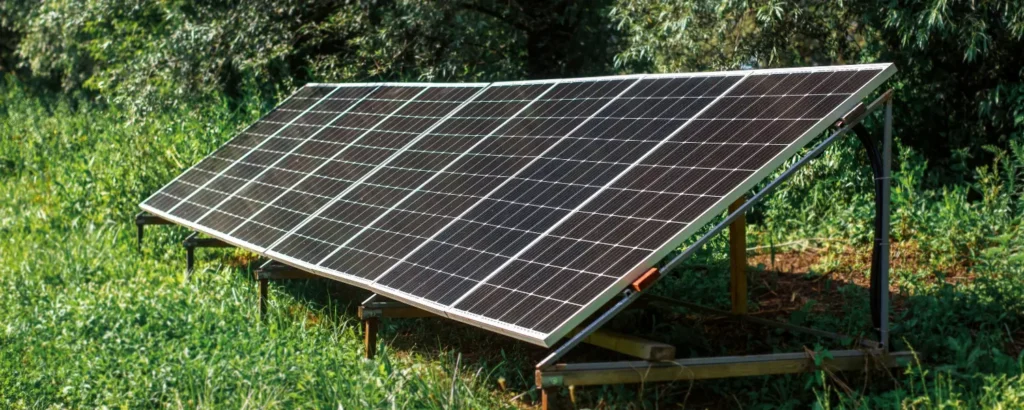
India is known to receive the maximum amount of the sun’s energy in the world. Still, millions of Indian families continue to pay a lot more monthly due to their electricity consumption. Now, the only practical and effective solution for this problem is the installation of rooftop solar PV panels.
If you are also planning to adopt solar energy or going to contact the leading solar manufacturing company in India, have a clear understanding of how solar PV panels generate electricity before.
What Is the Photovoltaic Effect?
The whole concept of converting sunlight into electrical energy revolves around one fundamental law of science, which is known as the photovoltaic effect. It involves the stimulation of electrons in the material used in the production of solar panels through light energy and the movement of these electrons to form an electric current.
The fundamental principle on which solar energy works involves the transformation of solar power into useful electricity. This process occurs due to a combination of elements designed to harness, transform, and distribute solar power to your house.
The cells of most photovoltaic solar panels are made of silicon. The solar panel is a flat solar plate that comprises several photovoltaic cells, which are the basic units for converting sunlight to energy.
Key Components of a Rooftop Solar PV System
Knowing how solar PV panels generate electricity becomes easier once you have a clear understanding of each component’s role.
- Solar Panels: These panels rest on your rooftop and are used to harness the sun’s energy. They comprise several photovoltaic cells, which are connected to one another. The photovoltaic cells present within the solar panels are arranged in series to enhance voltage output.
- Inverter: An inverter refers to an electronic device used to transform the direct current produced by the photovoltaic cells into an alternating current. The absence of the inverter implies that the energy from the solar panels cannot be used.
- Mounting Structure: The mounting structure holds the panels in position at an angle that allows maximum energy generation.
- Transformer (in larger systems): The role of a transformer in some installations is to step up the voltage of the alternating current (AC).
- Bidirectional Meter: A bidirectional meter tracks the electricity used from the electricity grid and the excess solar energy sent back.
- Solar Battery (Optional): The solar battery helps store the excess electricity that is produced by your system during peak times in order to use it when it’s needed.
Step-by-Step: How Solar PV Panels Generate Electricity
This is the entire process from the sun to the power running the electrical appliance in your home:
Step 1: Sunlight Hits the Panels
As soon as sunshine hits the panel, it creates a chemical reaction that causes electrons to start moving inside photovoltaic cells. As sunlight intensity increases, the movement of electrons will become faster, resulting in increased production of electric energy.
Step 2: Production of Direct Current (DC)
The movement of electrons in the photovoltaic cells due to the interaction of sunlight creates a flow that leads to an electric current. This electricity moves through the panel as Direct Current (DC).
Step 3: DC Converted into AC Using the Inverter
Electricity in the form of direct current (DC) produced by the solar panels cannot be used directly. The function of the inverter is to convert the DC electricity into AC electricity.
Step 4: Supplying Your House with Current
The current obtained from the process is sent to your switchboard and powers everything, including your fans, bulbs, and air conditioners at home.
Step 5: Excess Power Supplied to Grid or Stored in Batteries
Extra electricity can be distributed into the grid for its consumption or used by the battery storage for future use. Under Indian regulations, you can get credits for the excess power that is sent back to the distribution company (DISCOM).
Does Solar Energy System Work on Cloudy Days?
It is undoubtedly the most frequently asked question when thinking about installing solar panels on rooftops in India.
Solar panels require sun rays and not the heat to produce energy. Their output will get reduced on cloudy days or days that do not have many sunlight hours, but they will keep producing electricity as long as there is sunlight. Sometimes, the cooling effect is even beneficial to the process.
This is certainly an advantage for the people of North India who experience cold winters but still enjoy multiple hours of bright sun each day.
What Does a Rooftop Solar System Cost in India?
Rooftop solar energy systems for domestic use may vary between ₹45,000 and ₹65,000 per kilowatt. Further, the total costs of the installation of the 5-kilowatt residential rooftop solar energy system can be reduced to about ₹2.50 lakh to ₹3.50 lakh using the subsidies from the central and state governments. The payback period of residential rooftop solar energy systems in India ranges from 3 to 5 years.
PM Surya Ghar: Muft Bijli Yojana, introduced by the Government of India at the beginning of 2024, is aimed at promoting the use of rooftop solar energy among people. According to this initiative, homeowners who install rooftop solar power of 1 to 2 kW capacity will be able to receive a subsidy worth ₹30,000 to ₹60,000. This subsidy amount will be deposited directly into their respective bank accounts.
Conclusion
Solar PV systems on rooftops use the photovoltaic effect to produce electricity, where photons of light energise silicon and produce a direct current. Rooftop solar power is no longer out of reach due to the government’s subsidy program and the quick payback period of 3 to 5 years. With a robust supply chain offered by the solar manufacturing company in India, this is the perfect opportunity to switch to solar power.
Frequently Asked Questions
Q1) What is the difference between DC and AC in a solar system?
The solar panels generate DC, or Direct Current, that flows in one single direction. Appliances in homes consume AC or Alternating Current that alternates direction periodically. The role of an inverter is to change the DC power from the solar energy to AC power.
Q2) Does a rooftop solar system work during a power cut?
A typical grid-tied system will stop functioning in case of a power failure due to safety reasons. But if you have a solar battery system, your home will still be powered despite a power failure from the grid.
Q3) How long does a rooftop solar panel system last?
Quality solar panels typically come with a warranty of performance for 25 years. Without too much maintenance, a properly installed rooftop unit keeps on functioning effectively, even after paying back its costs within three to five years.