
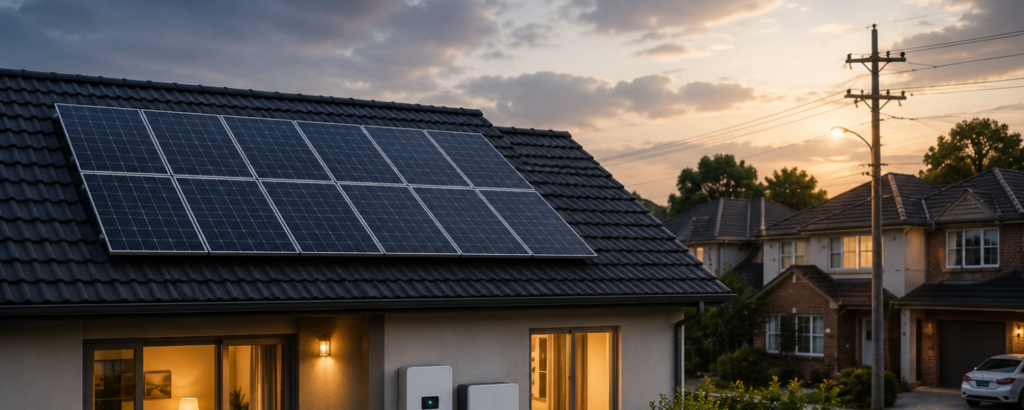
It is surprising to most homeowners that solar panels do not supply energy when there is a power outage. Solar panels are automatically disconnected whenever there is a power failure. It occurs as a safety precaution that ensures workers working on the damaged power lines do not get harmed. Only those solar panels that have battery backup capability will continue supplying power during such situations.
Therefore, do solar panels provide electricity during a blackout? Only if the system has been designed to do so.
Key Takeaways
- Standard grid-tied solar panels automatically turn off in case of a power outage.
- The anti-islanding feature ensures that there is no flow of electricity from the solar system back into the repairing lines.
- In blackout situations, the solar panels produce energy, but it is blocked by the inverter.
- A residential solar panel system equipped with batteries or a hybrid inverter helps keep some equipment operational.
- The off-grid solar panel will not be affected by any power outage because it will never depend on the grid.
- The amount of time that can be covered is totally dependent upon the size of the battery and the number of appliances used.
- Selecting a reliable solar manufacturing company in India will help with dependable backup equipment.
Do Solar Panels Work During a Power Outage?
The simple answer is: usually no.
Most houses that install solar PV panels use the grid-tie system, which is the most popular one on the market at present. With this system, the house generates electricity, uses it, and sends any excess to the grid. However, if there is no sun available, then the house just uses electricity from the grid.
However, as soon as the grid fails, everything changes for the worse. Even if there is sun shining brightly outside, the panels will fail to supply the house with electricity. There are many people who find this puzzling because panels seem to be completely fine and intact. Actually, it is not about damage; it is the way the system works.
Why Do Solar Panels Shut Down During a Power Cut?
The reason comes down to one word: safety.
In case there is an outage from the storm or due to any fault, the engineering team rushes to restore the lines. At that point, they consider the lines are entirely dead before getting into any contact with the wire.
However, think of the scenario where there is an active generation from a solar panel close to the location where the grid fails. The live electricity from the panel can harm the person repairing the grid line.
In order to protect the line worker from such dangerous conditions, each grid-tied inverter comes with a mechanism known as anti-islanding protection. This device detects the problem within milliseconds and disconnects itself from the power system.
What Happens to Solar Energy During a Blackout?
The panels could continue producing direct current even if your house is without electricity. However, the problem is that if your system does not have batteries or a hybrid inverter, there is nowhere for this electricity to go. It is prevented by the inverter from reaching the circuits in your house.
Simply put, your panels are operating normally, but you can’t do anything with the energy they produce. And this is the reason why most people wonder, “Do solar panels work during a power outage?”
Types of Solar Systems and How They Respond
Not all setups react in the same way during a power outage. Below is a comparison.
| System Type | During a Power Cut | Battery Required | Ideal For |
| On-Grid (Grid-Tied) | Shuts down completely for safety | No | Households aiming to reduce electricity bills |
| Hybrid (Solar + Battery) | Keeps running on solar and stored power | Yes | Areas with frequent power cuts |
| Off-Grid | Completely unaffected because there is no link to the grid | Yes, larger storage bank | Remote areas or unreliable grids |
Although grid-based systems are very affordable, they have no backup system. Hybrid systems aim to strike a balance between cost savings and resilience, which is why they are widely preferred by individuals who experience frequent blackouts. Off-grid systems can be used in rural places but require large batteries.
How Hybrid Systems Keep the Lights On
A hybrid home solar panel system is really the best answer to blackout worries.
This technology makes use of solar panels, batteries, and a grid connection that all work in synergy. Under normal conditions, the solar panels power the house while charging the batteries at the same time. In case of a grid failure, the hybrid inverter ensures that the house is disconnected from the grid.
The inverter then accesses the battery power along with the solar power. Most of the hybrid inverters available nowadays are able to perform this switch within just 10-30 milliseconds. This is quick enough to ensure that routers, laptops, and other sensitive electronic devices continue working uninterrupted.
How Long Does a Solar Battery Last During an Outage?
This depends entirely on your battery size and what you choose to power.
Batteries installed in homes generally hold around five to ten kilowatt-hours of usable energy. A reduced load, including lights, fans, and the router, extends the battery’s life significantly. However, adding the refrigerator or an air conditioner consumes the same amount of power much more quickly.
| Appliances Running | Approximate Power Draw | 5 kWh Battery | 10 kWh Battery |
| Lights, Fans, Router | ~0.5 kW | ~10 hours | ~20 hours |
| Add a Refrigerator | ~0.9 kW | ~5.5 hours | ~11 hours |
| Add AC | ~2.2 kW | ~2.3 hours | ~4.5 hours |
The sizing of the battery needs to be done based on your consumption and not just based on the maximum capacity. Most houses do not require the entire house to be covered.
Preparing Your Home Solar Panel System for Power Cuts
A bit of planning beforehand will go a long way during the next power outage.
- Go for a hybrid compatible inverter because regular inverters can’t supply reliable backup energy.
- Size your battery on the basis of your actual requirement and not some average figure.
- Start with basics like lights, fans, refrigeration, and internet connection.
- Take care of the maintenance of your panels and batteries, because dust and aging components affect efficiency.
- Source quality backup-ready components from a reputable solar manufacturing company in India.
- Check with your installer if your inverter can be upgraded without being completely changed.
Quick Ways to Cope Until the Power Returns
Even without a battery, a few simple habits soften the impact of any outage.
- Always keep LED lights that run on batteries charged and accessible at home.
- Store power banks to charge phones and other small essential devices during outages.
- Pre-fill your hot water bottle before an expected power outage.
- Wear warm clothes and bed sheets during winter when there is a power failure.
- Refrain from opening the refrigerator, as it stores cold air for long after the power has gone off.
Conclusion
So, do solar panels produce electricity during an outage? No, unless you have a battery backup system installed. Normal grid-tied systems will simply stop functioning in such scenarios, but hybrid and off-grid systems will continue operating normally. The correct size of solar panels at your residence ensures that an outage is nothing more than just an inconvenience for you.
Frequently Asked Questions
- Can solar panels generate electricity in the shade?
Yes, but the amount produced is considerably reduced. The solar cells do produce some electricity using the diffused sunlight even when shaded, although the amount produced is considerably lower compared to that in direct sunlight. - Do plug-in solar panels work during a power outage?
It would depend on the type of system. The simple plug-in types that connect to the grid will shut down just as usual. The ones equipped with battery storage can power up smaller gadgets when the power goes out. - How long does a solar battery last in a blackout?
This is determined by battery capacity and the load of the appliances. The 5kWh battery will last for about 10 hours for lighting and fan applications, whereas the heavy-duty appliances like ACs would drain the battery faster. - Should you unplug solar panels at night?
No, there is no need for that. The panels naturally stop working when the sun goes down, and the inverter controls it without any additional action on your part. - Are solar panels useless without a battery?
Absolutely not. Without a battery, solar panels would help save money by reducing electricity bills. However, they cannot provide electricity during a power outage without having stored energy. - Do solar panels restart automatically once power returns?
Generally, yes. In most cases, the system reconnects itself automatically once stability is restored within the grid after some time. In case the warning light stays on after that, it means there is a problem with the inverter.