
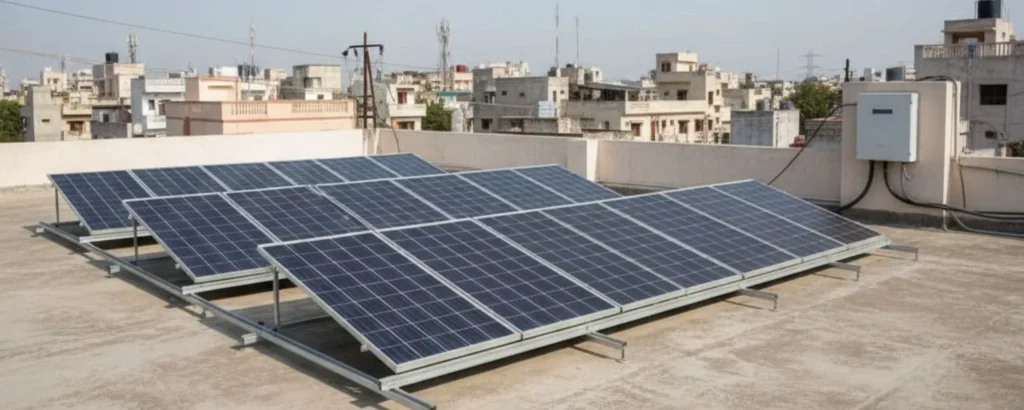
DCR solar power panels have also become a common topic of solar power as we approach 2026. The first thing that new consumers consider when opting for solar power, starts with subsidies. That focus is understandable. Incentives are visible, tangible, and often promoted as the biggest benefit. But they rarely tell the whole story.
The part which could be overlooked is the effect of DCR solar power panels as a whole, year to year, and whether or not these panels increase profitability. Looking at DCR only through the subsidy lens can lead to decisions that feel right initially but fall short over time. This blog aims to bring clarity by connecting policy, performance, and real-world outcomes.
Why DCR Solar Panels Are Significant in 2026
DCR solar power panels are relevant today because of the direction that the policies take, rather than the developments in the fields of science and technology. With a stronger push towards domestic manufacturing, DCR compliance has become mandatory in certain government-linked solar programs. As a result, DCR is often positioned as the preferred or safer choice.
The confusion arises when compliance is considered as superiority. According to DCR, the point where a panel is manufactured, not its performance, can be determined. Buyers believe when they choose DCR, their savings will be improved, while in fact, several other factors affect the performance.
The most confusion arises when the following three concepts are mixed:
- What projects are eligible for subsidies
- Where the solar panels are produced
- Longer term performance of the system
What are DCR Solar Power Panels and Where Do They Apply
DCR stands for Domestic Content Requirement, a government initiative to promote domestic manufacturing. DCR Solar Power Panels are manufactured with locally sourced and developed materials, as per the guidelines issued by the government. The purpose of DCR is not the standardisation of efficiency or quality of solar panels but the promotion of manufacturing in India.
DCR requirements typically come into play in the following types of situations:
- Subsidised rooftop solar schemes
- Government and PSU tenders
- Institutional or government-initiated projects
Outside these frameworks, DCR is often optional. This is especially relevant for homeowners planning a PV panel for home without applying for subsidies. In many private residential installations, buyers are free to choose Solar Panels based on performance, warranty, and long-term output rather than compliance alone.
The Different Kinds of DCR Solar Panels Available in 2026
In 2026, the DCR industry has matured to a great extent. Most DCR Solar power panels available today are based on mono PERC technology, with a few manufacturers offering improved efficiency variants.
However, not all DCR monitors are the same. Differences in capability usually come down to:
- Cell quality and consistency
- Manufacturing accuracy
- Long-term degradation behaviour
Two panels with the same wattage rating can differ significantly over a period of 20 to 25 years. This is why assessing the credibility and experience of the solar panel manufacturers company becomes as important as verifying whether or not the solar panel satisfies DCR standards.
Subsidies, Pricing, and the Real Cost of DCR Solar Panels
Subsidies tend to dominate conversations around DCR, but they rarely reflect the complete financial picture. While some schemes require DCR compliance, the subsidy amount does not always compensate for differences in system cost or performance.
When comparing solar panel price, it is important to look beyond the modules. Inverters, mounting structures, electrical components, installation quality, and continuous maintenance all add to the cost of a solar power system.
In the application, purchasers contrast two choices:
- a somewhat power-producing DCR system that is subsidised.
- a non-DCR system with higher generation but no subsidies.
To make this comparison clearer, understanding the difference between DCR and non-DCR solar PV panels helps evaluate both subsidy benefits and long-term energy output realistically. Rather of relying solely on upfront savings, the choice is based on conditions, future demands, and usage habits.
ROI and Performance: What Really Determines Long-Term Value
The value over time is actually determined by performance. Although DCR solar power panels have advanced, the system’s design and installation still have a significant impact on output.
Buyers should ask more insightful questions, such as how much energy the system would produce annually, rather than just concentrating on subsidy eligibility.
- How consistent will that output be in the long run?
- What rates of degradation are reasonable under actual Indian conditions?
Reliability and energy production, not labels, determine return on investment. DCR panels in certain applications ideally match cost and compliance requirements. Alternative solar panels may provide higher lifetime returns in other installations, particularly those that are performance-driven.
Why System Performance and Design Are More Important Than Panel Labels
One recurring theme in all successful solar projects is the panel origin has more of an impact than implementation excellence. A poorly conceived system built with high-end components can be outperformed by a well-planned system using mediocre panels.
Working with the top solar system manufacturer in India becomes crucial at this point. Instead of promoting DCR or non-DCR by default, they describe how each choice aligns with the technical and budgetary objectives of the project. The emphasis remains on outcomes rather than checklists.
Before suggesting any particular panel type, a seasoned solar panel manufacturer assesses consumption trends, roof conditions, shading, placement, and future expansion needs.
Conclusion: How to Consider DCR Solar Panels in 2026
In India’s solar environment, DCR solar panels are crucial, especially in situations where policy compliance is necessary. They can’t, however, be used for every project.
The most successful strategy in 2026 is contextual. DCR solar power panels are the most suitable choice if a project requires DCR compliance for it to be eligible for a particular plan. Buyers should evaluate each solar panel independently if the project is privately funded and performance-oriented.
Decisions should be supported by subsidies, not dictated. Systems built for steady energy production, dependable operation, and a high return on investment provide long-term value. Solar becomes a reliable investment rather than a compromise dictated by policy when preparation, execution, and lifespan performance are all in line.
Frequently Asked Questions
Usually not. DCR compliance has nothing to do with the inverter or structure, rather than with the domestic origin of the panel. Compatibility evaluations are important for wind load, rooftop layout, and voltage range. Correct component fitting is guaranteed by a skilled installation.
When required, request manufacturer information, product traceability, and assurance of scheme-specific compliance. Full documentation and warranty information are easily provided by reputable manufacturers. Consider it a warning sign if documents seem unclear or delayed.
While local production can increase availability to replacements and assistance, the brand’s network and installer relationships have a greater influence on service quality. In writing, buyers should verify service turnaround times, local part availability, and escalation procedures.
Incomplete site details, mismatched documentation, or approval deadline from the appropriate authorities are common causes of delays. A complete technical proposal, accurate client information, and clear verification of roof ownership are all helpful in expediting the process and avoiding back and forth.
Examine not only the headline price but also the anticipated annual generation, total system cost, warranty coverage, and service agreements. Verify the installation method and equipment grade as well. If the system design is poor, a less expensive subsidized option can perform poorly.
Plan Your Solar System the Right Way
Get expert guidance on DCR and non-DCR solar panels, system design, subsidies, and ROI—tailored to your site and energy needs.