
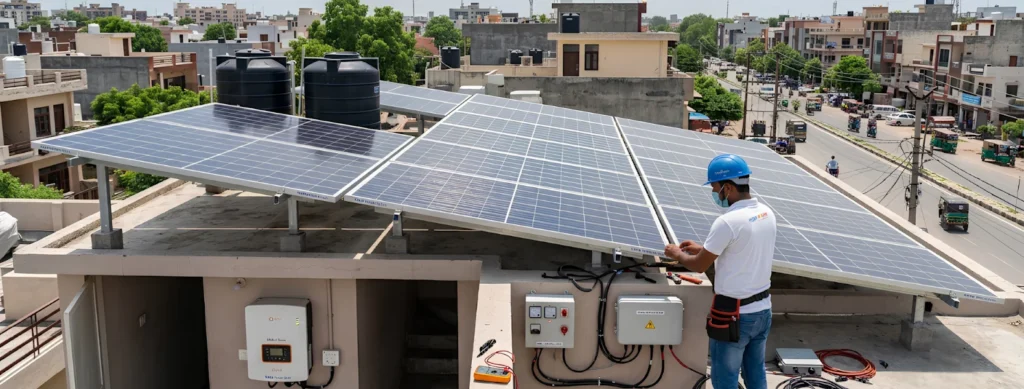
Rooftop solar panels work by turning sunlight into usable electricity right on your own roof. The solar panels trap sunlight and produce DC electricity using the photovoltaic effect. The inverter converts the DC electricity produced into AC electricity, which can be used for domestic purposes. Any excess electricity produced is fed back into the grid using net-metering. The DISCOM bill becomes lower as a result. This is what makes rooftop solar such a practical, low-maintenance way to reduce electricity costs in India.
Key Takeaways
- A rooftop solar system captures energy from the sun using photovoltaic panels and inverts the DC power into AC.
- On average, a 3 kW solar system produces 12-15 units of electricity per day in India.
- The net metering facility enables you to export extra power generated and receive credits on your DISCOM bills.
- The best solar panels for rooftops include polycrystalline and even TOPCon & HJT cells.
- Solar rooftop installation takes about one to three days, depending on residential home conditions.
- Solar battery storage is not mandatory for grid-connected rooftop solar panels, but is useful in case of frequent power cuts.
- Choosing between EPC rooftop solutions and a solar panel dealership affects your entire ownership experience.
What Exactly Is Rooftop Solar and How Does It Work?
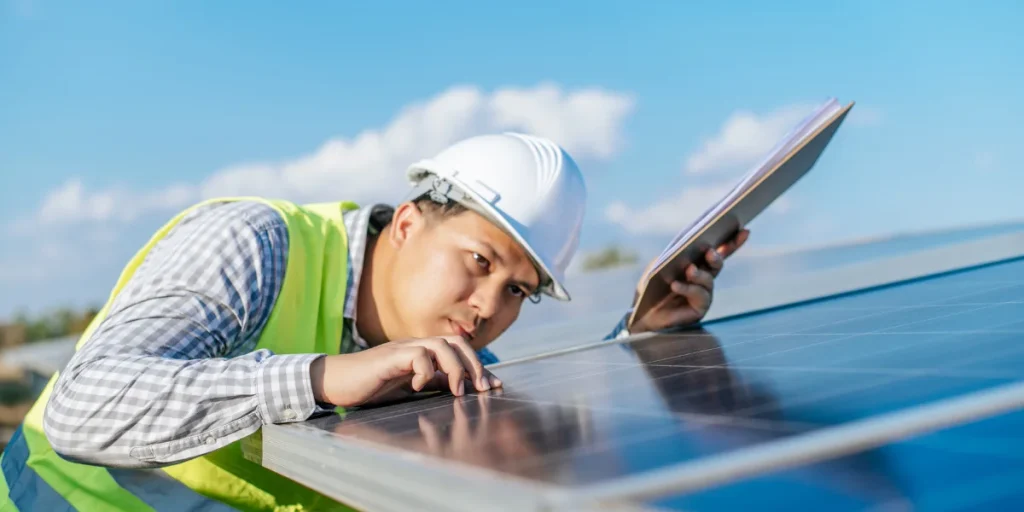
Rooftop solar is a small power plant installed directly on your roof. The system uses photovoltaic cells, which are made of silicon, to capture the sun’s rays. The photons of light hit these cells and knock off electrons, resulting in DC, or direct current. This phenomenon is known as the photovoltaic effect and was discovered by Edmond Becquerel in 1839.
However, this direct current electricity cannot be used for your household devices; rather, it goes to a solar inverter where it is changed into 230V AC power. Your house will first use this solar power and then any other power from the grid.
What Exactly Are Rooftop Solar Panels and How Do They Work?
Every rooftop solar setup relies on a handful of essential parts working together smoothly.
| Component | Function | Typical Lifespan |
|---|---|---|
| Solar panels | Convert sunlight into DC electricity | 25 to 30 years |
| Solar inverter | Converts DC to usable AC power | 10 to 15 years |
| Mounting structure | Holds panels securely at the right tilt | 25 years or more |
| Wiring and safety devices | Carries current safely, protects against faults | 20 years or more |
| Net meter | Records import and export of electricity | 10 to 15 years |
| Battery (optional) | Stores surplus power for backup use | 5 to 10 years |
Each part plays a specific role. Skipping quality on any one component shortens the life of the whole system.
Which Are the Best Solar Panels for Rooftop Installation in India?
Not all panels perform the same way. The best solar panels for rooftop use in India depend on your budget, roof space, and efficiency needs.
| Panel Type | Efficiency Range | Best Suited For |
|---|---|---|
| Polycrystalline | 17 to 19% | Budget installations, larger roofs |
| Monocrystalline PERC | 20 to 22% | Most residential and commercial roofs |
| TOPCon (n-type) | 22 to 24% | Premium homes wanting compact panels |
| HJT (Heterojunction) | 23 to 25% | High-efficiency, low-degradation needs |
The monocrystalline PERC modules still form the most preferred option for Indian homes. Nevertheless, TOPCon modules are rapidly rising due to their ability to operate at reduced temperatures with increased output.
How Does a Solar Rooftop Installation Actually Happen?
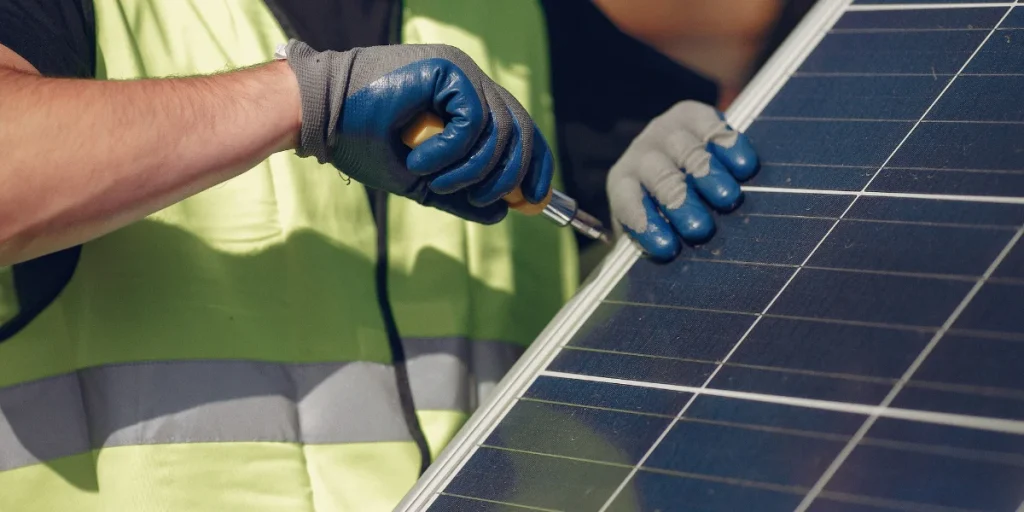
Solar rooftop installation follows a fairly standard sequence across most installers in India. Understanding it helps you know what to expect.
- Site survey: Installers check roof strength, shading, orientation, and sunlight exposure.
- System design: Engineers plan panel layout and system size based on your consumption.
- Subsidy application: Your installer files your PM Surya Ghar application on the government portal.
- DISCOM approval: Your local DISCOM inspects and approves the feasibility of your installation.
- Mounting and wiring: Technicians fix mounting structures, install panels, and complete all wiring.
- Inverter installation: The inverter is connected and configured to sync with grid frequency.
- Net meter installation: DISCOM replaces your existing meter with a bi-directional net meter.
- Testing and commissioning: The system is switched on and verified against its design output.
Most residential installations are completed within one to three days once approvals come through.
On-Grid, Off-Grid or Hybrid: Which Rooftop Solar System Should You Choose?
There are mainly three types, each one suitable for different conditions.
- On-grid systems remain connected to the DISCOM grid and do not involve any battery system. These systems are subsidized under the PM Surya Ghar scheme and give the quickest ROI but get disconnected automatically in case of power failures.
- The off-grid systems operate independently of the DISCOM grid and use battery packs. These are suitable for remote places where there is no grid connection available nearby. These systems are costlier and do not come under subsidy schemes.
- Hybrid systems combine grid connection with battery backup for the best of both worlds. They cost more upfront but keep your lights on during outages.
Do You Need Solar Battery Storage With Your Rooftop System?
Solar battery storage is not compulsory for a standard on-grid system, but it changes what your solar setup can actually do for you.
In the absence of a battery, your solar inverter turns itself off immediately in case of a power grid outage. This is due to the anti-islanding feature designed for the safety of utility workers and ensures that there is no backup power during the outage despite the presence of sunlight.
The installation of solar batteries will overcome this problem. The cost of a battery bank using Lithium-ion technology with a 5 to 15 kWh capacity ranges between ₹60,000 and ₹1,50,000. It will allow you to store excess energy generated by you in the daytime for later use or in case of grid failures.
How Does Net Metering Turn Surplus Solar Into Bill Credit?
Net metering is the regulation that ensures rooftop solar panels become a profitable venture. Here is what happens during the process.
- The DISCOM will install the two-way net meter at your property.
- During the daytime, your house consumes the solar energy first.
- Any additional energy produced is fed into the grid and is measured.
- At night time, your home will be using the grid’s electricity normally.
- Your bill depends on the import-export difference, net units.
- Extra credits usually roll over into your next bill period.
Rules and carry-forward periods vary by state and DISCOM, so always confirm locally.
How Much Can a Rooftop Solar System Save You?
Savings scale directly with system size and your existing electricity consumption pattern.
| System Size | Daily Output | Monthly Output | Suitable For |
|---|---|---|---|
| 1 kW | 4 to 5 units | 120 to 150 units | Very small homes |
| 3 kW | 12 to 15 units | 360 to 450 units | Most 2 to 3 BHK homes |
| 5 kW | 20 to 25 units | 600 to 750 units | Larger homes, heavy AC use |
| 10 kW | 40 to 50 units | 1,200 to 1,500 units | Commercial or large residential |
Under PM Surya Ghar, residential systems get a subsidy of up to 40% for capacities up to 3 kW. Systems between 3 and 10 kW receive a 20% subsidy. Most homeowners recover their investment within four to six years.
What Mistakes Should You Avoid Before Installing Rooftop Solar Panels?
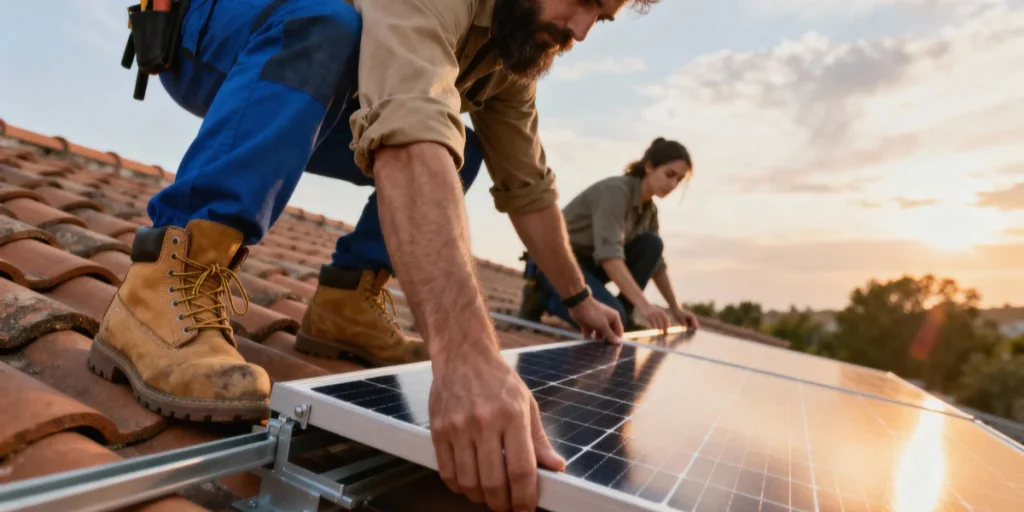
A number of common mistakes subtly decrease the value of even an excellent investment.
- Selecting the panel capacity without considering how much electricity you use each month.
- Not considering the effect of shading by trees and neighboring buildings, which will lower the output of the solar panels.
- Not verifying the BIS and IEC certification of panels and inverters.
- Going with an installer who skips the DISCOM feasibility approval procedure.
- Not paying attention to the requirements of earth and lightning protection per IS standards.
Avoiding these mistakes protects both your subsidy eligibility and your system’s long-term output.
How Much Maintenance Does Rooftop Solar Really Need?
Rooftop solar systems demand very little upkeep compared to most home appliances. Wash the panels once or twice a month, and more frequently in dusty regions. Also, check the inverter display for any warning messages from time to time. You should also have an annual check-up of the system by professionals for the wiring and connections.
Conclusion
Rooftop solar genuinely simplifies once you understand its five moving parts: panels, wiring, inverter, home use, and net metering. Selecting proper panels, a proper EPC contractor, and battery storage makes your rooftop solar system more sustainable. With subsidies and decreasing costs, rooftop solar is one of the best investments to make in India. So get a quote today.
Frequently Asked Questions
Does rooftop solar work during cloudy or rainy days?
Yes, but at a lower capacity. Cloudy days mean that the panels will produce only 20-60% of their peak capacity, since diffused sunlight can also activate the photovoltaic effect and create energy.
What happens to rooftop solar during a power cut?
A standard on-grid system automatically shuts down in milliseconds when there is a grid outage. Anti-islanding is compulsory for safety reasons. A hybrid system is required to provide backup power supply during outages.
Can I install rooftop solar on any type of roof?
Most roof types, including concrete, metal, and tiled, support rooftop solar installation. The main requirement is structural strength to safely bear the panels and mounting frame’s weight.
How much roof space does a rooftop solar system need?
Roughly, a 1 kW system needs 80 to 100 square feet of shadow-free roof space. Larger systems scale up proportionally from that base figure.