
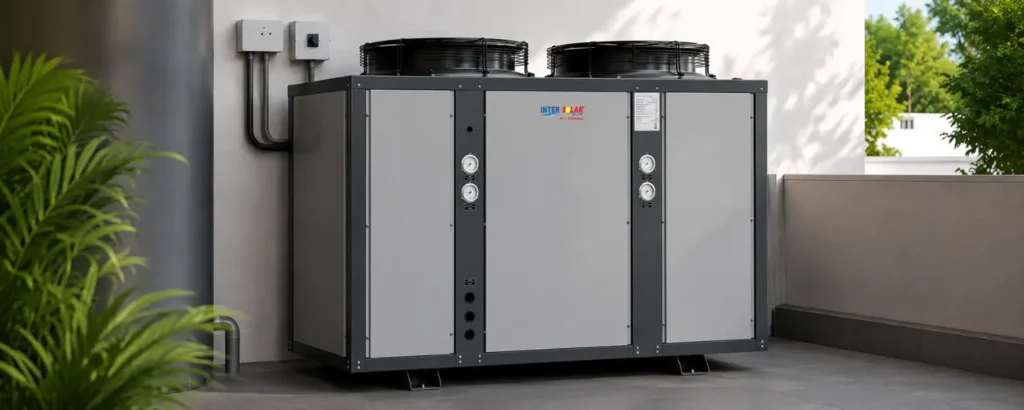
The heat pump water heater system doesn’t work the same way as a geyser because it draws heat from the surrounding air rather than producing it. The heat is then compressed and transferred to the water storage tank. Such a simple change would reduce your electricity consumption for water heating by 60 percent to 70 percent. – A smart investment for Indian homes or commercial units with higher warm water needs.
Key Takeaways
- A heat pump heater extracts heat from air and transfers it to water; it doesn’t produce heat.
- It operates under the principle of a refrigeration cycle involving four stages, which are: evaporation, compression, condensation, and expansion.
- It consumes 60-70% less electricity than a regular electric geyser.
- Coefficient of performance (COP) is the index on the basis of which you can determine your actual savings.
- Most heat pump water heaters recover their higher initial cost within three to five years.
- Heat pump water heater installation requires a ventilation area of about 8 to 10 sq ft.
What Is a Heat Pump Water Heater?
Think of your fridge, and now picture it working in reverse. This is precisely how a hot water heat pump works. It extracts heat from its surrounding environment and then uses the extracted heat to heat the water in the storage tank.
The standard electric geyser uses electrical energy to produce heat energy. It’s just a one-to-one conversion process, nothing more. On the other hand, the heat pump heater works by transferring already available heat energy through the use of refrigerants. It means that for one unit of electricity used, it will give three to five units of heat.
How Does a Heat Pump Water Heater Work? Step by Step
The complete system is based on an enclosed refrigeration cycle that works much like your air conditioner. Here’s what happens in each step:
- Evaporation: A fan blows the surrounding air over the evaporating coil. The liquid refrigerant in this process absorbs the heat and turns into gas.
- Compression: An electric compressor compresses the gas, increasing its temperature significantly. It is the only step during which electricity is used in this process.
- Condensation: The heated gas is then passed through a condenser coil surrounding the water tank. Heat from the refrigerant gets transferred to your water, heating it to between 55° and 60°C.
- Expansion: The refrigerant moves through the expansion valve to reduce its temperature and pressure. It then moves back to the evaporator, where it absorbs heat once again and continues the cycle.
Almost all models have a backup electric heater that gets activated when the outside temperature drops very low. However, this does not happen often in Indian cities.
What Is COP and Why Does It Matter?
The full form of COP is the Coefficient of Performance. It represents the heat generated per unit of energy consumed. The COP value of a regular electric geyser is about 1.0, whereas the COP value of a typical heat pump in India is between 3.0 and 4.5.
A COP of 4 indicates that with one unit of electrical input, there will be four units of heat output. Remember to always check this before buying. Don’t just check the wattage or the best heat pump company in India.
Heat Pump Water Heater vs Electric Geyser vs Solar Water Heater
|
Feature |
Heat Pump Hot Water Heater |
Electric Geyser |
Solar Water Heater |
|
Technology |
Refrigerant cycle, moves heat |
Resistance heating, generates heat |
Sunlight absorption |
|
Efficiency (COP) |
3.0 to 4.5 |
Around 1.0 |
Depends on sunlight |
|
Electricity savings |
60 to 70% lower than geyser |
Baseline, highest running cost |
Near zero on sunny days |
|
Works in monsoon or at night |
Yes, uses ambient air |
Yes |
No, needs direct sunlight |
|
Typical lifespan |
15 to 20 years |
8 to 10 years |
15 to 20 years |
|
Payback period |
3 to 5 years |
Not applicable |
3 to 6 years |
How Much Can a Heat Pump Water Heater Actually Save You?
Consider a family of four with hot water consumption of 100 liters each day. An average electric water heater of 2kW capacity will cost around ₹10,000 each year.
The heat pump hot water heater, having a COP of 4, costs merely ₹3,200 to ₹4,500 each year. This means that one saves between ₹9,500 and ₹13,500 annually per household. Hence, savings only grow as electricity tariffs rise further.
Where Can You Install a Heat Pump Water Heater?
Heat pump water heater installation is much simpler than many would imagine. All you need is a well-ventilated space measuring about 8 to 10 square feet.
1) A bathroom vent, a dry balcony, terrace, or utility area will suffice.
2) In a residential setting, the entire process is typically done in one day.
3) Minimal adjustments need to be made to your current plumbing system/geyser connection.
4) In a commercial environment such as a hotel/hospital, the entire process takes 2-3 days.
5) Ensure the right sizing of the unit according to your hot water requirement.
Is a Heat Pump Water Heater Worth It for Your Home?
There are many concerns people have regarding some myths surrounding this particular technology. Here are the truths –
1) “It won’t work during monsoon.” Wrong. It absorbs heat from the atmosphere, which has nothing to do with sunshine; hence, it doesn’t matter if it rains.
2) “It makes too much noise to be placed in a flat.” Wrong. The units operate at 40 to 55 dB, like a ceiling fan.
3) “It requires too much space.” Wrong. Regular-sized units can be installed in a duct or balcony of 8 to 10 square feet.
4) “The tank gets empty during winters.” Wrong. There is a backup heating system within the tank that works automatically whenever required.
If your family uses hot water regularly and you have high geyser bills, it is time to make the switch.
Final Words
The heat pump water heater is more than just an upgrade from a conventional water heating system. The cost-effectiveness of the system will not only help you save up to 60-70 percent but also earn back your investment in a few years. So, ready to slash down on your electricity bills? Get a free quotation right away from the best heat pump water heater in India.
Frequently Asked Questions
- Do heat pump water heaters use a lot of electricity?
No, because they require much less energy than the standard geyser. For instance, a 200L unit with a COP of 3.8 will use about 2.5 to 3.5 units per day. A regular geyser requires 4 or even more units to do the same job. - What is the average lifespan of a heat pump water heater?
Most domestic heat pump water heaters last 15 to 20 years with proper maintenance. That is nearly double the 8 to 10-year lifespan of a standard electric geyser. - Which is better, a tankless water heater or a heat pump water heater?
A tankless heater gives instant hot water but uses high wattage on demand. A heat pump water heater is far more energy efficient for daily household use, though it needs storage space. - Does a heat pump hot water heater work during a power cut?
No, it needs electricity to run its compressor and fan. If paired with a battery storage system or solar setup, it can keep running for a short period during outages.