
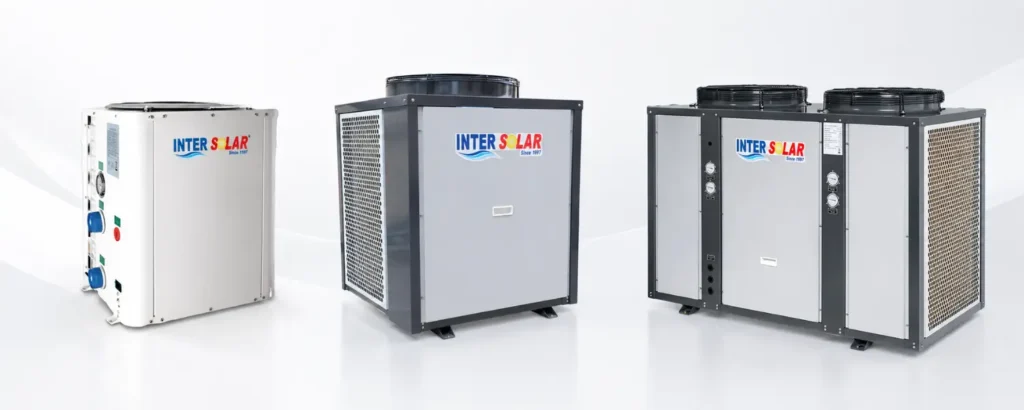
Due to global uncertainty, the war situation, volatile tariffs, and fluctuating energy prices, the need to save money has increased globally and for Indians, too. In such a scenario, every family seeks ways to reduce their expenses, and in this effort, electricity usage stands out as a viable option.
Since electricity bills are rising all over India, households are exploring alternatives for heating requirements like water heaters and more. Instead of relying on the conventional but expensive electrical appliances, heat pump technology is a more efficient energy consumption option.
However, before jumping straight to finding out the top heat pump manufacturers in India, it is important to know all the types of heat pumps, their uses, and more. Only the correct choice of the heat pump will help in your money-saving purpose.
What Exactly Is a Heat Pump?
A heat pump does not actually make any heat. What it does is simply move the heat from one location to another. The thermodynamic principle on which it works is basically the same as that of refrigerators, except it operates in the opposite direction. With every unit of electricity used, you get three to four units of heat energy, which makes it highly economical. In fact, heat pumps support India’s Net Zero 2070 roadmap, and adoption could reduce electricity bills by roughly 60 to 75%.
Types of Heat Pumps: A Clear Breakdown
The selection of your heat pump is highly dependent on where you obtain the heat from and where it will be used in your house. So, let’s know about the common types of heat pumps and their respective benefits.
Air Source Heat Pumps
Air source heat pumps are known to absorb heat from the outdoors and throw it indoors either for water or house heating. However, it is capable of reverse operations too, which cools down the indoors by throwing the hot air outdoors.
Advantage for Homeowners: This heat pump is easier to install than the rest and proves to be more economical over a period of time. The most convenient feature of this pump is that it can be mounted indoors as well as outdoors of your home.
The homeowners, who are looking for both heating and cooling functionalities, can even choose a split model, where one unit is indoor, and the other is outdoor.
Note: Its effectiveness may decrease in extremely cold climates, and an additional heating system might be required. In India, air source heat pumps work efficiently, especially in the southern and central regions with moderate temperatures.
Ground Source (Geothermal) Heat Pumps
This type of heat pump utilises the natural heat energy that is preserved underneath the earth’s surface. Since the temperature below the earth’s surface remains the same all year round, these units perform consistently irrespective of the harsh climatic changes.
Advantages for Homeowners: There is high energy efficiency that leads to low energy costs. Also, these pumps are highly durable because not all units are exposed to extreme weather. Hence, they are suitable for both traditional radiators and under-floor heating.
The geothermal heat pumps do not come without some drawbacks. They require more initial expenses in order to install and excavate the systems. Also, these systems need more land space to bury the coils in the ground.
Water Source Heat Pumps
Water source heat pumps extract heat from the surrounding water bodies, like rivers, lakes, or wells. The reason is that water has excellent properties for holding heat, which makes the system efficient.
Advantages for Homeowners: Better efficiency is observed, especially when the water remains at constant temperatures. Additionally, installing water source heat pumps can reduce the overall costs due to high efficiency.
On the other hand, the problem associated with this heat pump system is also “inaccessibility to water near the building”. Owing to external factors such as algae growth and environmental changes, the maintenance of the heating process might get complicated over the years.
Hybrid Heat Pumps
Hybrid heat pumps utilise both air-source and ground-source technologies. The machinery of these pumps can change from one mode to another, depending mostly on the environmental factors.
Advantages for Homeowners: People prefer this type of heat pump because of its flexible heat mode operations. Also, they can provide more consistent cooling and heating across different Indian seasons.
However, some drawbacks of installing hybrid heat pumps include a greater maintenance requirement and higher initial operational costs.
How to Choose the Right Type for Your Home
With several heat pump types, choosing the right one is an important decision. If you have also made your decision to shift to heat pump technology, you must consider the following factors before making the call.
- Climate & Region: The part of India where you live can influence your decision-making big time. In northern India, installing heat pumps that function at low outdoor temperatures can prove to be efficient.
On the other hand, if you live in a coastal area, then a corrosion-resistant heat pump is essential. When we consider the central and southern parts of India, these regions can handle air-source heat pumps.
- Home Size & Insulation: A house with poor insulation requires a larger heat pump to keep it comfortable. Hence, homeowners need to ensure that the sizing is done by consulting a professional.
- Available Space: Apartments with limited space can benefit from wall-mounted or slim-profile air source pumps. In case of bigger spaces, such as in villas, there is the option to explore ground or water source pumps.
- Budget: The overall point behind the installation of heat pumps is to save without compromising the water or other heating needs. If you want lower upfront costs that suit Indian climatic conditions, then an air-source system is the one. In the case of ground or water source systems, the upfront cost is higher but offers better long-term savings.
- Energy Efficiency Ratings: Before buying the heat pump system for your home, check for the following ratings to compare their performance:
- Coefficient of Performance (COP), which measures the efficiency of the heat pump.
- Indian Seasonal Energy Efficiency Ratio (ISEER), which evaluates the seasonal efficiency of the system.
Overall, the performance evaluations are conducted by the Bureau of Energy Efficiency (BEE).
Conclusion
Heat pumps are not a speciality product anymore. They are now considered a viable and more economical option for Indian homes looking to save on their power consumption.
Depending on whether you opt for an air-source heat pump for an urban apartment or want an elaborate combination system for a bigger home, the key is to match the system’s capacity with the available space. Proper installation and maintenance ensure maximum efficiency, lower energy costs, and year-round comfort.
FAQs
1. What is the lifespan of a heat pump?
If properly maintained, the lifespan of a heat pump can be anywhere between 10 and 15 years, or even more. Maintenance includes keeping the air filters clean, clearing the outdoor unit, and having it checked periodically by professionals.
2. What is the most efficient type of heat pump?
Ground source heat pumps have proven to be the most efficient ones due to the constant temperatures that they make use of. The only drawback with the same is that they come at a higher price point, but they are energy-efficient and reliable.
3. What are the 4 main components of a heat pump?
The four major components are –
- The evaporator (heat absorber)
- The compressor (temperature increaser)
- The condenser (heat distributor to water)
- The expansion valve (control of refrigerant distribution within the unit)
4. How long should a heat pump run per day?
The optimal working duration of the heat pump is estimated to be 10 to 15 hours per day. The amount of time the heat pump will work per day depends on several factors, including outside temperatures, house insulation, and hot water requirements.