
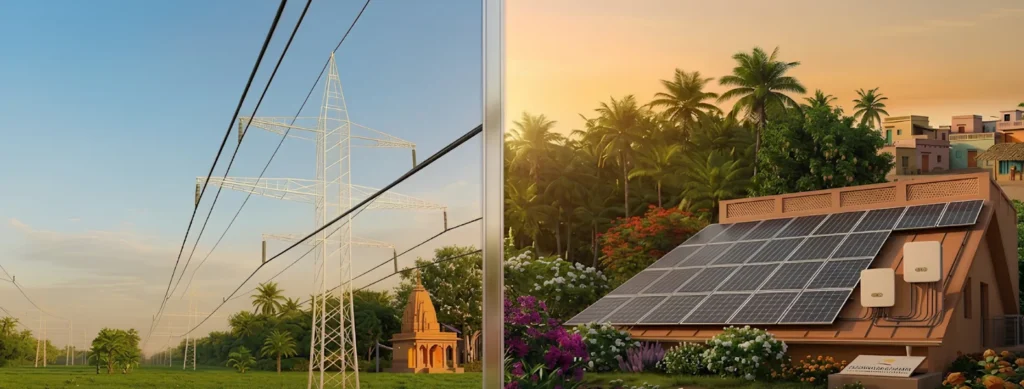
Rooftop solar vs grid power comes down to cost over time. Grid power does not require any up-front payment, but the cost will increase along with the tariffs. The initial cost of rooftop solar is higher. However, the cost per unit generated by the technology drops substantially after its payback period. For most residential and commercial establishments with a roof, rooftop solar is more economical.
Key Takeaways
- Grid electricity incurs no initial cost, but the rates keep increasing each year.
- Solar panels that use rooftop solar technology have an initial investment, but most pay back in about 3 to 5 years.
- Eligible houses can apply for up to ₹78,000 from the PM Surya Ghar scheme for panels of 3 kW and above.
- There are no subsidies for commercial clients; hence, finance and tariffs determine their return on investment.
- On-grid solar panels stop functioning in case of a power cut; therefore, it doesn’t provide any backup.
- Net metering involves receiving credit for excess energy, though the export rate may be lower than retail tariffs.
- Off-grid solar panel systems need batteries, cost more, and suit remote or unreliable locations.
- Estimates suggest solar power costs around ₹2 to ₹4 per unit, while the grid power tariffs remain ₹5 to ₹9.
How Does Grid Power Reach Your Home?
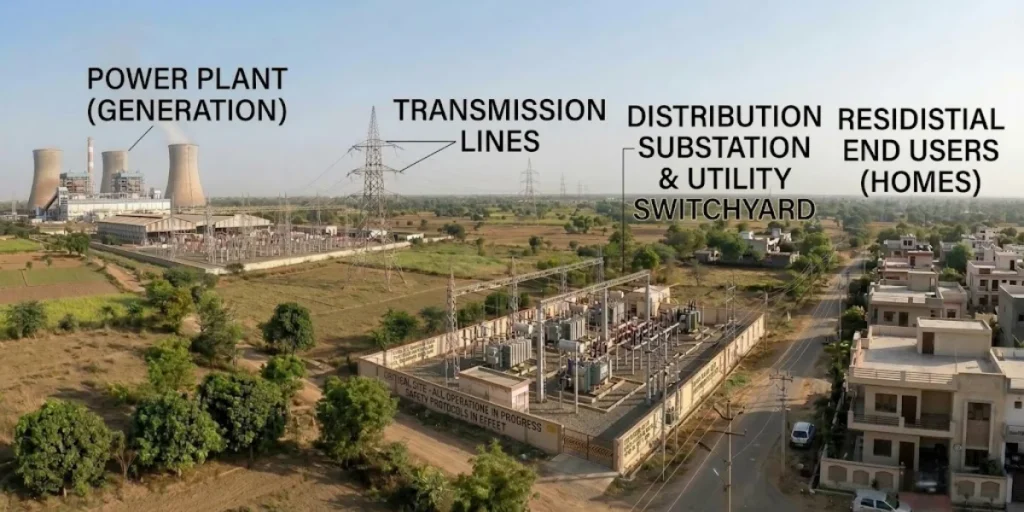
Grid electricity is produced from a big plant and is transmitted through transmission lines to your local DISCOM. The State Electricity Regulatory Commission establishes and updates tariffs regularly.
- The DISCOM bears the cost of the infrastructure, and hence you don’t need to pay anything initially.
- Each unit used by you is charged according to the existing tariff.
- You have minimal influence on the changing tariffs.
How Does Rooftop Solar Work?
The solar panels on your roof harness solar energy to generate DC electricity. This electricity is converted by an inverter to AC electricity. The electricity generated is used by your house, and the excess electricity is returned to the grid via net metering. For households connected to the grid, on-grid solar power systems are the easiest way to go.
Rooftop Solar vs Grid Power: How Do the Costs Really Compare?
How Much Does Each Unit of Electricity Cost?
Electricity rates through the grid vary from ₹6 to ₹15 per kWh based on which state you hail from and the type of consumer you are. Rooftop solar power will cost approximately ₹2.5 to ₹4 per unit during its lifespan. These are just approximations; however, do check your tariffs before taking any decisions. For a detailed cost breakdown, explore Solar Panel Price in India.
How Much Does a Rooftop Solar System Cost Upfront?
Expect roughly ₹45,000 to ₹65,000 per kW before subsidy. A 3 kW system, the most common home size, typically costs ₹1.6 to ₹2.5 lakh before subsidy. However, the central subsidy can reduce that figure by up to ₹78,000.
| Factor | Rooftop Solar | Grid Power |
|---|---|---|
| Upfront cost | About ₹45,000 to ₹65,000 per kW before subsidy | None |
| Cost per unit | Roughly ₹2.50 to ₹4 over system life | ₹6 to ₹15 per kWh, varies by state |
| Payback period | Usually 3 to 5 years | Not applicable |
| Tariff changes | Largely fixed after installation | Revised periodically by regulators |
| Subsidy | Up to ₹78,000 for eligible homes | No direct subsidy for commercial users |
| Power cuts | Shuts off without a battery | Also unavailable during outages |
| Control over costs | High, since you generate on-site | Low, since tariffs are set externally |
Rooftop Solar vs Grid Power: Which Saves More Over 25 Years?
How Long Does Payback Take?
Payback period is easy to calculate. Divide the cost of the solar system after subsidy by your annual savings. If you have a ₹1.5 lakh solar system that helps you save ₹30,000 per year, your payback period would be 5 years.
What Could a 3 kW System Save?
Suppose you have a house consuming around ₹2,500 per month on electricity from the grid. The saving potential of installing a 3 kW system costing ₹1.5-1.8 lakh post-subsidy could be ₹14-16 lakhs over 25 years. The system can produce approximately 4,200-4,350 units in a year with 1% loss in production each year. Assuming that the tariff increases by around 4% each year, the savings could be as follows:
- Savings in the first year: around ₹30,000
- Savings in 25th year: around ₹80,000
- Payback period: 5-6 years
The above calculations are dependent on your consumption, tariff in your state, and actual production.
When Does Grid Power Make More Sense?
Grid electricity is more appropriate for those houses or offices where there is no daytime consumption, minimal rooftop area available, or plans for relocating after a few years. Consequently, a short-term occupancy period may make the initial cost unaffordable. Rooftop solar requires a strong and shadow-free roof.
Will Rooftop Solar Work During Power Cuts and Cloudy Weather?
What Happens in a Power Failure?
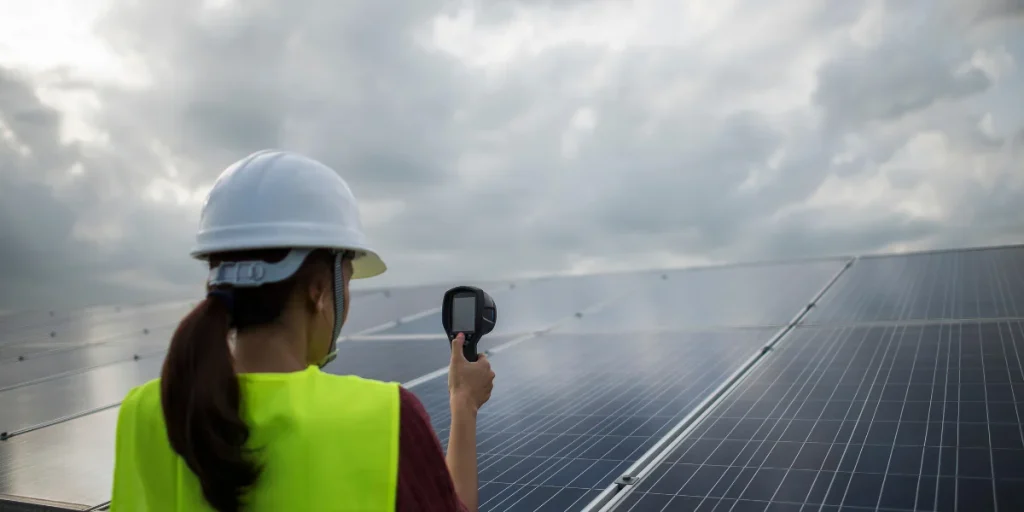
An off-grid power system stops operating in case of blackouts. This mechanism prevents electricians from being electrocuted while making repairs. You can have power supplied from battery storage, but a 5 to 15 kWh lithium battery would cost you ₹60,000 to ₹1.5 lakh.
How Is Solar Energy Produced During Cloudy Days?
Even during rainy days, solar panels continue to produce energy. It ranges from 20% to 60% of the energy they normally produce.
Is Rooftop Solar Capable of Replacing Grid Power Fully?
Not necessarily. Conventional setups remain grid-tied and use grid power at night. On the other hand, hybrid models include battery storage as well. Off-grid solar panels require battery storage as well, are more expensive, and have no subsidies available in India; hence the reason most households use the grid as backup power.
What Changes for Businesses?
Commercial customers fail to benefit from the central subsidy provided to residents; hence, their initial investment will be relatively higher. Moreover, business firms stand to benefit a lot when daytime usage is relatively high.
- Industries and offices that operate during the day benefit a lot.
- Business firms operating at night might not benefit a lot from the solar panels.
- OPEX or PPA models enable the developer to put up the system, and then you will pay for the electricity generated.
- Time spent within the premises is important since payback periods take years.
What Should You Check Before Choosing Rooftop Solar?
Which Panels Qualify for the Subsidy?
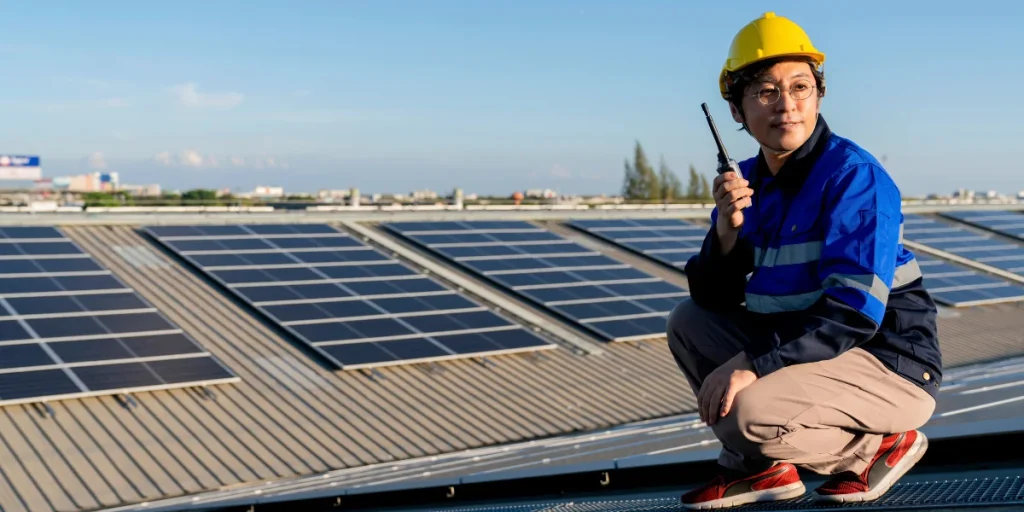
Only DCR panels qualify for PM Surya Ghar because they use solar cells made in India. Non-DCR panels may cost ₹6,000 to ₹12,000 less for a 3 kW plant, but they forfeit the subsidy. Choose a solar panel manufacturer in India that builds its own panels, not one that only resells them.
| Panel Type | Typical Efficiency | Best Suited For |
|---|---|---|
| Polycrystalline | 17 to 19% | Budget installations and larger roofs |
| Monocrystalline PERC | 20 to 22% | Most residential and commercial roofs |
| TOPCon | 22 to 24% | Premium homes wanting compact panels |
The mono PERC solar panels are frequently used in India. Inter Solar has been manufacturing solar panels since 1997, and the range of Solar PV panels provided by the company is available for both commercial and residential applications.
What Should a Solar Quote Include?
“Good” quote includes panels, inverter, mounting, cabling, protection, installation, tax and metering costs, and warranty. This needs to mention estimated annual electricity generation. Extremely low quotes usually indicate that earthing and protection are omitted from the quote.
Is Your Roof Suitable for a Rooftop Solar Panels Installation?
Around 80 to 100 sq ft of unshaded area is needed for each kW of installed solar system. The presence of trees, water storage tanks, and nearby buildings lowers energy generation capacity. That is why a site survey is needed before the purchase. Only a reliable rooftop solar panels installer will check roof strength and shading first.
How Can You Manage the Upfront Cost?
There are various ways that can ease this initial burden. Various banks and financial institutions provide solar energy loans for a period of 6 to 60 months. Businesses may consider using the SIDBI 4E program for structured finance. Under the OPEX and PPA methods, there is no initial burden, as an entrepreneur finances the project.
What Costs Come After Installation?
Rooftop solar has low running costs, but a few expenses arrive later.
- Panel cleaning is more significant in dusty environments.
- Wiring inspection and maintenance once a year.
- Inverter replacement may range from ₹25,000 to ₹65,000.
- Replacement of batteries every 5 to 10 years.
A small grid bill still arrives after solar, but it is usually much smaller.
Final Verdict: Rooftop Solar vs Grid Power
For the majority of homes and commercial properties that have unshaded rooftops and regular usage during the day, rooftop solar is better than grid electricity in terms of savings. Convenience and no installation cost are advantages of grid electricity while predictability of the costs is the advantage of rooftop solar. However, before making the decision, you need to calculate your own expenses and consult an installer for a quote and subsidies.
Frequently Asked Questions
Do I still pay an electricity bill after installing rooftop solar?
Yes, but generally much less. Your house takes power from the grid at night and when the sun does not shine. Any extra power produced is fed back to the grid via the process of net metering, and credits reduce your future electricity bill.
What happens to rooftop solar during a power cut?
A conventional on-grid system shuts down during an outage. The safety mechanism ensures that utility company personnel remain safe as they do their repair work. Batteries can serve as backup power sources, but these increase the cost of the system by ₹60,000 to ₹1.5 lakh.
How long does a rooftop solar system last?
Most systems have a life expectancy of about 25 years. The panels tend to lose their efficiency by 1% every year, causing the power generation to reduce gradually. The inverters are replaced once during this period at a price range of ₹25,000 to ₹65,000.
Can a business get the PM Surya Ghar subsidy?
The program focuses on residential customers; hence, business customers will not be able to access it. However, the business can gain from the benefits of reduced energy consumption and financing for the installation. The eligibility of businesses for such a scheme will depend on the program, type of installation, and the state.
Which panels qualify for the subsidy?
Only DCR panels are eligible for subsidies, which implies that only those panels whose cells are made in India will be eligible. The installation should take place through a vendor empanelled by MNRE. Non-DCR panels can be cheaper at first glance, but they get no subsidy at all.
Is rooftop solar suitable for every roof?
Almost all types of roofs are suitable for rooftop solar, including concrete, metal, and tiled roofs. Approximately 80-100 square feet of unshaded space is needed per kW. Structural testing ensures the roof structure is strong enough to support the solar panels.