
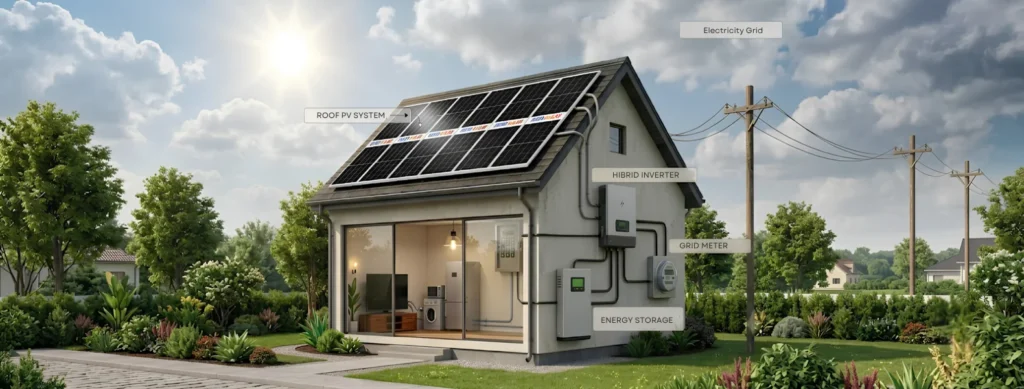
In a hybrid solar system, there is integration of solar cells, batteries, and electric grids into a single power system. Solar electricity can be used to run your property directly, and the excess electricity can be used to charge the batteries for future use.
In cases where solar and battery energy fail to meet the demands, the electricity needed can be supplied from the electric grid. In times of electricity blackout, battery electricity can be used to run some important loads.
Key Takeaways
- A hybrid solar system includes both solar power generation, storage in batteries, and connectivity to the grid.
- First, solar energy supplies electrical loads, and any excess energy can either be stored in batteries or supplied to the grid if allowed.
- The hybrid inverter manages the flow of electricity from solar panels, through batteries, loads, and to the grid.
- The cost of a hybrid solar system depends greatly on the size of the system, the size of batteries, technology, and other factors.
- Hybrid systems offer backup capability that a standard On-grid Solar System normally cannot provide during outages.
- Unlike an Off-grid solar system, a hybrid solar system retains the electricity grid as an additional energy source.
- Proper sizing of batteries is important since your backup needs may vary the project cost.
- Eligibility for net metering and subsidies may vary depending on program requirements and DISCOM regulations.
What Is a Hybrid Solar System?
A Hybrid solar system includes both photovoltaic power and battery power while being connected to the electricity grid. Such a configuration permits the transfer of electrical power between several sources according to the level of production, usage, and battery power.
Such flexibility makes Hybrid solar technology different from both grid-connected and fully independent solar systems. The grid-connected system mostly involves using solar along with grid electricity and does not involve battery power.
An off-grid solar system operates only on solar energy and batteries without the need for the public electricity supply. A hybrid solar system represents an intermediate solution.
How Does a Hybrid Solar System Work?
This working procedure commences with the generation of DC electricity from the Solar PV Panels as they receive sunlight. The hybrid inverter will convert the DC electricity into AC electricity that is applicable to standard electrical loads.
With high solar generation, the hybrid solar power system usually produces current electricity first and later deals with any extra generated power. It depends on how it has been set up because extra electricity can be used to charge batteries or supplied to the grid via a permitted metering system.
With the reduction in the amount of sunlight, the stored electricity in batteries can then provide power to selected loads rather than relying totally on the grid power. If the battery electricity is not enough, then the grid may supply the required additional electricity.
What Are the Key Components of a Hybrid Solar System?
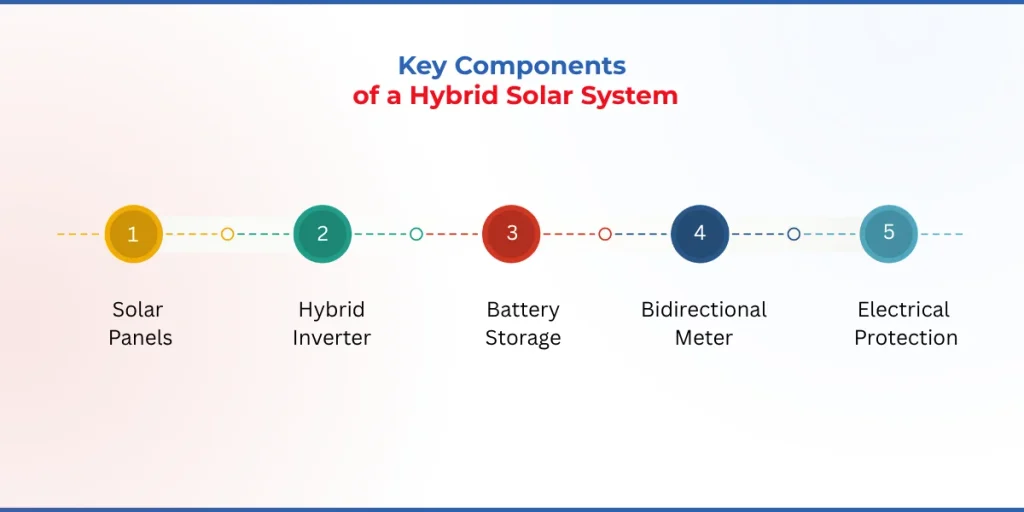
Every hybrid solar system needs compatible components working together rather than individually selected equipment with mismatched specifications.
Solar Panels
The panels make use of the photovoltaic effect to turn solar energy into DC electricity. Several factors will dictate the maximum amount of electricity that the panels will be able to produce. When comparing various solar panel manufacturers, buyers should examine module specifications, warranties, certifications, and compatibility carefully.
Hybrid Inverter
Hybrid inverters control the distribution of electrical energy between the solar panels, battery, loads, and grid. Depending on their features, modern hybrid inverters can provide MPPT technology, system monitoring, and prioritised energy distribution.
Battery Storage
Batteries store additional power to be used during the night when there is not enough energy generation. Lithium-ion batteries usually possess certain differences from the regular lead-acid batteries in terms of cycling, maintenance, and capacity. Additionally, battery specifications can considerably affect the overall hybrid solar system price.
Bidirectional Meter
The two-way meter will measure electricity that enters from the grid as well as surplus electricity that is available for exporting to the grid. Such export agreements will be subject to the policies of DISCOMs and the state governments concerned.
Mounting and Electrical Protection
Structures hold panels while cables, earthing, surge protection devices, and distribution components assist in ensuring an electrical installation is safe. These components may be secondary, but inadequate balance-of-system design may negatively impact future performance and reliability.
Hybrid Solar System vs On-Grid vs Off-Grid: Which Is Different?
Before investing, compare each system against grid reliability, backup expectations, and available budget.
For a deeper comparison, see Inter Solar Systems’ On-Grid Solar System guide.
| Feature | On-Grid | Off-Grid | Hybrid |
|---|---|---|---|
| Grid connected | Yes | No | Yes |
| Battery usually required | No | Yes | Yes |
| Outage backup | Usually no | Yes | Yes |
| Grid export | Possible | No | Possible |
| Initial investment | Lower | Higher | Higher |
| Best suited for | Reliable grids | Remote locations | Backup plus savings |
The on-grid solar system is appropriate for situations where the electricity supply is reliable without the need for any backup.
The off-grid solar system may be the ideal solution for remote areas where a reliable source of utility electricity is not available.
The hybrid solar system is a better option if you would like to enjoy solar power while saving on stored electricity.
What Are the Main Benefits of a Hybrid Solar System?
A correctly designed hybrid solar system offers benefits beyond simply installing batteries alongside panels.
- During outages: The stored electrical energy is sufficient to sustain a chosen portion of critical loads during blackouts.
- Increased use of solar energy: The extra energy generated during the day can be stored instead of being wasted.
- Dependence on the grid is reduced: The stored energy from solar sources can help meet evening demands when generation is reduced.
- Efficient power management: The inverter automatically manages the combination of solar, battery, and grid power.
- Adaptability in the future: Some installations provide for an increase in battery storage or solar generation capability as needed.
- Dependence on generators is reduced: Proper backup batteries can minimize dependence on generators during short outages.
However, these benefits depend heavily on correct sizing and realistic expectations about battery capacity.
How Much Does a Hybrid Solar System Cost in India?
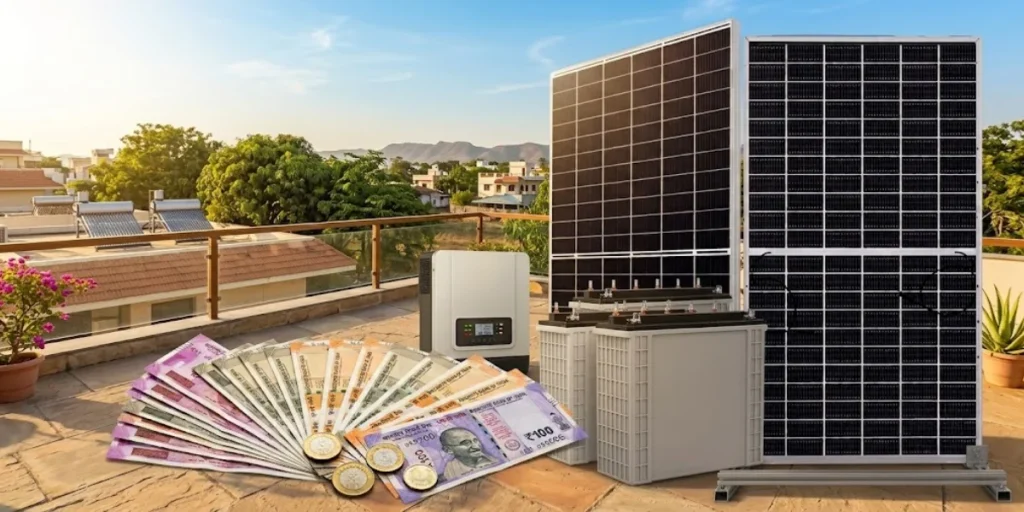
Several variables influence the quotation:
- Solar Array Capacity: Higher generation capacity means a higher number of panels and support systems.
- Battery Capacity: Increased storage time will result in increased investment in the project.
- Battery Technology: Various battery types have different purchasing costs, lifecycle, and maintenance needs.
- Inverter Specifications: Rating, MPPT design, and backup function affect inverter prices.
- Roof Conditions: Structural preparation, difficult access, and increased cable distance can raise installation costs.
- Electrical Safety Devices: Electrical protection devices are integral parts of the installation.
- Installation Quality: Solar installation companies with experience can give better engineering and post-installation service.
Request itemised quotations rather than comparing only one final number.
That approach reveals exactly what battery capacity, modules, inverter, protection equipment, and services each proposal includes.
Can Subsidies Reduce the Hybrid Solar System Price?
Central Financial Assistance is available for eligible residential grid-connected rooftop systems through PM Surya Ghar, depending on the guidelines of the scheme. As per the present central financial assistance scheme, ₹30,000 is available per kW for the first two kilowatts of the eligible capacity of residential systems.
The third kilowatt gets ₹18,000; hence, the total central financial assistance available is ₹78,000 for systems more than three kilowatts. The cost of batteries cannot be automatically considered as a subsidy within the project.
Furthermore, eligibility is also based on the relevant setup, equipment needs, vendor requirements, and program policies. Always ensure you meet the current criteria set out by the National Portal and DISCOM before proceeding with your solar panel installation. To find out more about solar panel installations, Inter Solar Systems provides detailed information.
How Should You Size the Battery for a Hybrid Solar System?
A battery should not be picked based on the kilowatts of your solar system alone. Start by determining what electrical devices you need running in case of a power outage. Find out the total power required by these devices, and how long you really need a backup.
For instance, lights, fans, internet devices, and even cooling equipment have much smaller requirements compared to several air conditioners. Moreover, do not forget to calculate the usable battery capacity and not just its capacity.
As batteries have certain limits on their operation and energy losses, the nominal capacity may not always coincide with the electricity available for your devices.
Which Common Hybrid Solar System Mistakes Should You Avoid?
The costliest assumption is that more machinery means a better system, as big batteries mean higher costs and longer financial gains without offering any day-to-day benefits.
The other mistake related to undersized batteries is that the backup will run out much sooner than you expect. Yet another mistake is that all household devices are attached to the backup without considering the maximum inverter load.
Some inverter and storage capacities have to be much higher in the case of heavy loads. Future upgrade options must also be taken into account while buying equipment.
How Can You Maintain a Hybrid Solar System?
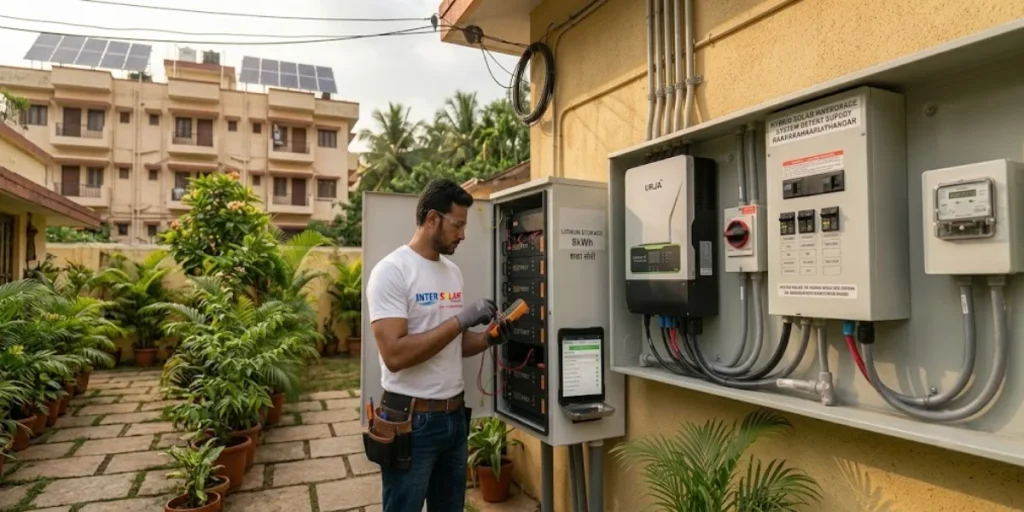
A hybrid solar system requires maintenance even when the main equipment in the system does not contain any mechanically operated parts. Panels should be kept relatively clean depending on the level of dust in the area.
The inverter and batteries should have enough ventilation and operate under optimal conditions. The production of the panels should be checked for any irregularity, together with the behavior of the batteries. Cables and mounting systems should also be regularly inspected.
Conclusion
The hybrid solar energy system uses solar power, storage systems, and grid electricity as the source of power. The advantage of the system is not determined by acquiring the highest possible capacity, but by capacity designed with regard to the consumption level.
Consider the cost of the hybrid solar system, the battery specifications, inverter capacity, installation issues, and future needs before going forward.
A well-designed system helps utilize solar power and still retain reliable access to the grid.
Frequently Asked Questions
1. Can a Hybrid Solar System Work During a Power Cut?
Yes, when designed for backup operation. The inverter safely isolates designated circuits from the grid and uses available solar or stored battery electricity. Backup duration depends on battery capacity and connected loads.
2. Can a Hybrid Solar System Work Without a Battery?
Some hybrid inverters can operate without batteries under supported configurations. However, battery storage is required when you want stored electricity to provide meaningful backup during grid outages. Always check the specific inverter design.
3. How Long Does a Hybrid Solar Battery Last?
Battery lifespan depends on chemistry, operating temperature, charging cycles, depth of discharge, and manufacturer specifications. Therefore, compare cycle-life warranties and usable capacity instead of relying on a single general lifespan figure.
4. Can I Convert an Existing On-Grid System into a Hybrid System?
Often, yes. An existing installation may accept battery storage through compatible equipment or an AC-coupled configuration. However, inverter compatibility, wiring, system design, and existing approvals require technical assessment before conversion.
5. Does a Hybrid Solar System Qualify for Government Subsidy?
Eligible residential grid-connected rooftop capacity may qualify under current PM Surya Ghar rules. Central assistance reaches ₹78,000 for qualifying systems above 3 kW. Eligibility still depends on current technical, equipment, and programme requirements.