
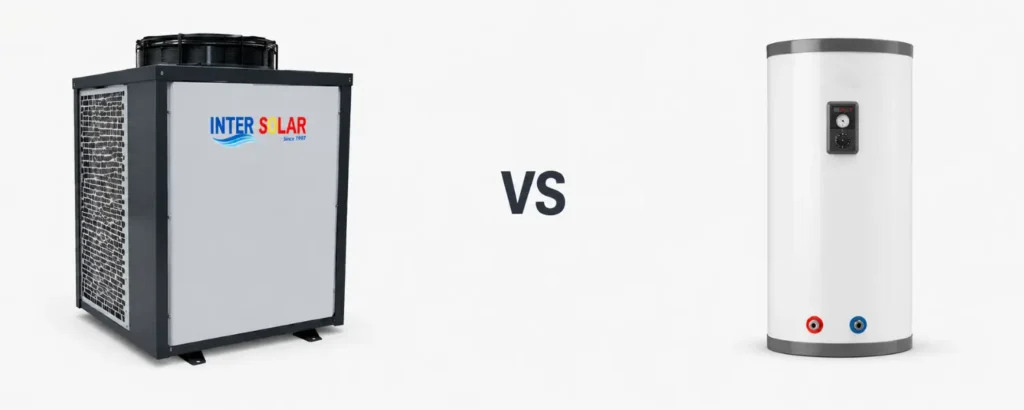
Hot water is the number one need of several Indian homes daily. They require hot water for bathing, laundry, washing utensils, and other purposes. The geyser that runs on electricity is the conventional way of heating water, but it was once economical. However, due to the increasing prices of electricity and energy-saving practices, most individuals prefer the heat pump water heater.
For those who are confused as to which option to choose, the following guide will help you make a well-informed decision.
How Does a Heat Pump Water Heater Work?
Heat pump systems do not produce heat like a regular geyser system but simply transfer heat from the surrounding environment to the water tanks through a process called refrigeration. The refrigeration cycle has the following four main parts:
- Evaporator
- Compressor
- Condenser
- Expansion valve
Being a process that utilises heat but does not generate it, a heat pump consumes much less energy to produce the equivalent amount of hot water. That is what differentiates heat pumps from conventional heating systems.
Unlike solar water heaters, which depend totally on sunlight, heat pumps are operational all through the year, including when the weather is not clear or warm enough. This is why they make excellent water heaters for India.
How Does a Traditional Electric Geyser Work?
Electric geysers contain a resistance heating coil that is submerged within the container that holds the water. An electrical current is passed through this coil, allowing for the conversion of electrical energy into thermal energy. This system, despite being straightforward and efficient, has two distinct weaknesses:
1) Excessive use of electrical power
2) Energy losses from the water tank while storing water
This makes electric geysers relatively expensive to operate compared to other alternatives.
Running Costs and Long-Term Savings
On purchasing, a normal geyser seems to be more economical than a heat pump water heater. But when taking into consideration the cost of energy for its operation, it turns out to be quite costly.
For instance, imagine a home where hot water is frequently used in two or three bathrooms. The electric geyser in such cases will have to keep working continuously, consuming a lot of energy.
In contrast to conventional water heaters, the heat pump water heaters compensate for their higher initial costs with their lower operational expenses. The heat pump manufacturers in India say that although heat pumps are relatively more expensive than regular geysers, they turn out to be much cheaper to operate over their life cycle.
Lifespan and Maintenance
1) Heat Pump Water Heater: Lasts for about 10 to 15 years with little or no need for maintenance, and some better quality ones can last for 20 years. Since the appliance does not have an element that heats directly within the water storage tank, there is reduced scale formation, less wear-and-tear, and a lesser likelihood of failure.
2) Electric Geyser: Lasts between 8 and 12 years on average, but through regular maintenance, some geysers can last for 15 years. Some geysers may require changing of elements, scale cleaning, and general maintenance.
This means that heat pumps have even less maintenance cost, making them more economical than geysers.
Installation: What to Expect
The electric water heater is installed like a hanging fixture on the walls and is connected to electricity. Installation is very easy and common.
However, heat pumps require another approach for installation. For instance, they function better if installed in an open space outside, like on the terrace, utility room, service balcony, or the roof itself. This will require professional installation, but it will definitely pay off later.
Environmental Impact
Traditional geysers depend a lot on electrical power that is produced using fossil fuels in India. This leads to a larger carbon footprint for each cycle of heating.
In the case of heat pumps, the bulk of the heat energy comes from the surrounding air, leading to a reduction in carbon emissions. Heat pumps are regarded as environmentally friendly as they use heat energy and emit less greenhouse gases compared to traditional geysers. Additionally, heat pumps may be used in conjunction with solar panels.
Which Homes Benefit Most from a Heat Pump?
Heat pumps are most appropriate for:
- Moderate to large-sized families with several bathrooms
- Buildings with higher hot water requirements daily
- Apartment buildings, villas, and stand-alone houses
- Business properties like hotels, hostels, guesthouses, etc
- Any household that wishes to save on electricity bills
In small families with low hot water requirements, a conventional geyser would suffice initially. Nevertheless, the heat pump is the better option when thinking about its value for the future.
Quick Comparison at a Glance
| Feature | Heat Pump Water Heater | Traditional Electric Geyser |
|---|---|---|
| Energy Savings | Up to 70% to 80% | Baseline |
| Lifespan | 10 to 20 Years | 8 to 15 Years |
| Operating Cost | Low | High |
| Installation | Outdoor, since it needs ventilation | Indoor and wall-mounted |
| Maintenance | Minimal | Periodic Servicing Needed |
| Environmental Impact | Low Carbon Footprint | Higher Emissions |
| Upfront Cost | Higher | Lower |
Conclusion
The heat pump water heater stands out as the best choice for Indian homes, considering cost-effectiveness, energy savings, and eco-friendliness. Although electric geysers continue to prove more economical in terms of buying prices, they keep adding to your electricity expenses over time.
With a reduction in heating costs of up to 70-80%, heat pumps represent true value for money. Be it constructing a new house or upgrading your old equipment, opting for heat pumps would be a wise choice.
Frequently Asked Questions
Q1. What is the 30-minute heating rule for heat pump water heaters?
Heating up for 30 minutes is known as the process in which the heat pump should operate continuously for at least half an hour in order to attain the desired temperature. Heat pumps are responsible for transferring external heat, and since this process takes some time, adequate running time guarantees maximum efficiency and production of hot water.
Q2. What runs up your electricity bill the most at home?
The process of heating water is one of the major factors that lead to high electricity bills at home in India when using an electric geyser. This is because an electric geyser uses resistance heating technology, which makes it consume a lot of energy every time it is used.
Q3. How long does it take for a heat pump water heater to recover its cost through savings?
The payback time will vary depending on your daily use and your regional power rates. However, most homes get their initial costs paid off in a period between two and four years through lower power bills. This is followed by additional savings throughout the rest of the system’s lifespan, which could last another 10 to 20 years.