
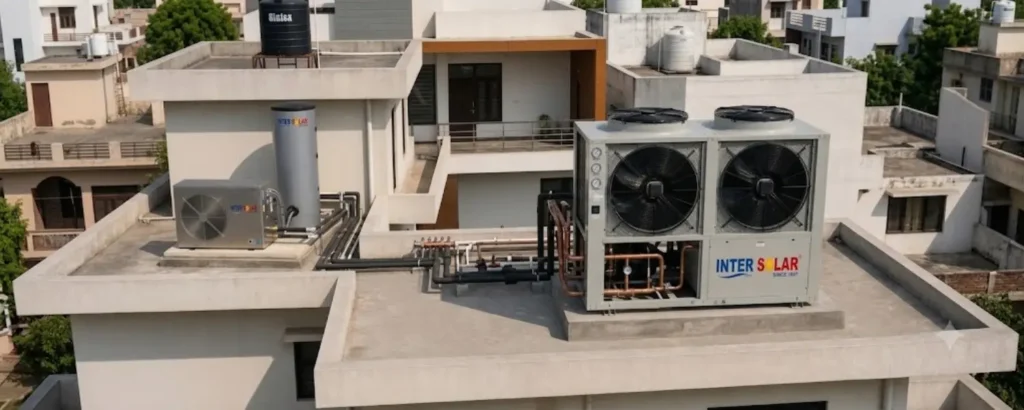
The Residential Heat Pump is fast emerging as the sensible choice of heating over conventional geysers and heaters used in Indian households. The guide includes information on how a heat pump works, why a heat pump uses less energy compared to a geyser, the process of installing a heat pump, and its approximate cost.
Key Takeaways
- Residential heat pump technology transfers heat instead of generating it. So, it uses 60 to 70 per cent less electricity than conventional electric water geysers.
- Heat pumps available in India have a cost range of ₹80,000 to ₹4,00,000 for domestic use. The price variations depend on the size of the property, capacity, and brand.
- The upfront investment for heat pump installation is on the higher side, but it significantly lowers the energy bills over the years. Residents recover their investments within 3 to 5 years.
- Installation is a multi-step process that includes inspections, capacity selection, plumbing, and electrical work, which professional technicians do best.
- Heat pumps can last from 10 years up to 15 years or more, compared to 5-8 years for the typical geysers.
What Is a Residential Heat Pump?
It is an appliance that absorbs heat from its surroundings and uses it to heat your water tank or room, instead of producing heat through a combustion process or resistive heating. The working principle of heat pumps is similar to that of a refrigerator or air conditioner.
The reason why a heat pump is more efficient compared to a normal geyser is that it transfers existing heat and does not generate any new heat.
For each unit of power that a high-quality heat pump uses, it is capable of providing three to five units of heat. This ratio is called the coefficient of performance (COP). (A number worth checking before you make the purchase)
How Does a Heat Pump Work?
The process follows a simple cycle:
- The outdoor unit pulls the air outside, regardless of how cool the air feels
- Refrigerant captures heat from this air and converts it to hot vapour
- The compressor compresses the gas, which raises its temperature further
- The hot refrigerant passes through a coil, releasing heat into water or air
- The cold refrigerant goes back outside for the cycle to start the process all over again
Overall, there is no involvement of fire or a heating element. It’s complete physics.
Benefits of a Residential Heat Pump
Lower Electricity Bills: Heat pumps require up to 70% less energy than electrical geysers to produce the same amount of hot water. The annual energy requirement of a typical 2kW electric geyser used by a family of four is 1,825 kWh, whereas that of a heat pump operating with a CoP of 4 is only about 456 kWh. This saves roughly ₹9,500 to ₹13,500 annually at current tariffs.
Suited to the Indian Climate: Heat pumps function very effectively in India because of its warm climate. Hence, in places where the temperature is high on average, it extracts heat from the surroundings and functions better. The best part is that heat pumps can work efficiently even during cold weather.
Dual Function: The reverse-cycle heat pump system heats in the winter and cools in the summer, making it function just like an AC. The only difference is that heat pumps used to heat water do not have dual functionality.
Longer Lifespan: A domestic heat pump can last up to 10-15 years or even more, depending on how well it is maintained, while an ordinary geyser lasts only up to 5-8 years.
Low Maintenance, High Safety: Heat pumps have fewer moving parts compared to combustion heaters and pose no threat from an open flame or gas, which makes them one of the safest types of water heaters.
Eco-Friendly: Heat pumps emit less greenhouse gas compared to both fuel-based and power-hungry electric systems.
Residential Heat Pump Cost in India
Prices vary in terms of capacity, brand, and complexity of installation. Refer to the table below for the approximate costs of this appliance.
| Capacity | Ideal For | Approximate Cost |
| 100-150 Litres | Small Families | ₹80,000 – ₹1,50,000 |
| 200–300 Litres | Medium homes | ₹1,20,000 – ₹2,50,000 |
| 300–500 Litres | Villas and apartments | ₹2,00,000 – ₹4,00,000 |
In order to purchase a high-quality heat pump machine from the best heat pump manufacturers in India, there are certain aspects that you must consider beyond its cost. Check the energy efficiency ratio, quality of the compressor, tank construction, wiring, and piping in the home.
Residential Heat Pump Installation Process
Installation of a heat pump system is not a plug-and-play task. The installation process normally proceeds in the following way:
- Site Surveying – Technicians evaluate space, ventilation, water availability, drainage, and the current electric setup.
- Capacity Selection – Depends on family size, daily water consumption, and peak hot water demand.
- Preparing the Installation Area – Important to provide proper ventilation, a firm base, and a proper drainage system.
- Installing the Unit – Fix the indoor and outdoor units with appropriate spacing.
- Plumbing Connections – Connect the hot and cold water pipes, install valves, and insulate the pipes.
- Electrical Connections – Set up the required electrical circuit, earthed properly.
- Testing and Commissioning – Perform tests for proper water flow, temperature, compressor, and safety before handing over the system.
Residential systems are normally installed within one day, while commercial ones will take more time. Not having professionals to install the system could decrease efficiency and reduce its lifespan. So, never compromise on professional installation to cut costs.
Choosing Among Heat Pump Manufacturers in India
Various heat pump manufacturers in India cater to residential customers, providing BEE and BIS-certified heat pumps that suit Indian climatic conditions.
The leading solar manufacturing company in India offers solar water heaters along with a range of heat pumps to choose from. When selecting a manufacturer, ensure to check the COP value, warranty provisions, and post-sale services. The most important of all of them is matching the required capacity for your residence.
Conclusion
A residential heat pump has higher upfront costs than a geyser, but pays for itself through lower electricity bills within the first few years. For Indian homeowners who are looking to cut running costs and reduce their carbon footprint, it remains one of the smartest choices.
FAQs
1. Which heat pump is best in India for the home?
No one brand can be termed the best. Go for 5-star BEE-rated, ISI-certified units from reliable heat pump manufacturers in India that suit your household size and hot water requirements and have a COP equal to or more than 3.5.
2. Which is cheaper, an AC or a heat pump?
The air conditioner is less expensive to purchase and install. The heat pump is more expensive but has much lower operating costs, as it transfers heat and does not produce it.
3. What is the average lifespan of a heat pump?
Most efficient domestic heat pumps usually have an average lifespan of 10 to 15 years, while some claim even longer. However, a typical electric geyser lasts between 5 and 8 years only.
4. What is the 20-degree rule for heat pumps?
This is a common HVAC rule of thumb, which states that the heat pump or air conditioner operates at its best efficiency when the temperature differential between indoors and outdoors is maintained within 20 degrees.
5. Which is better, a geyser or a heat pump?
Heat pumps are better in the long run for most houses. They use 60% to 70% less power compared to a geyser. They are expensive initially but pay themselves off after three to five years.